The economic drivers forcing orchard removals
Rising input costs are making it more financially viable for some farmers to leave land fallow rather than continue planting. Sean Gilbert, a fifth-generation farmer and co-owner of Gilbert Orchards, has begun turning 50-acre plots of Gala and Red Delicious trees into mulch chips. He stated that it is a relief to stop "hemorrhaging dollars on orchards that the market doesn't want," noting that the current economic model has not made sense for some time.
The financial strain is not limited to small holdings. Many established operations have fallen into deep debt, with several large-scale farms filing for bankruptcy following years of unfavorable economic conditions. The pressure stems from a multifaceted set of rising expenses and declining returns:
- Input Costs: Significant increases in the price of fuel, fertilizer, and specialized farming equipment.
- Labor: Rising costs associated with maintaining a seasonal workforce.
- Currency Fluctuations: A strong U.S. dollar that diminishes the purchasing power of foreign buyers.
- Trade Barriers: International tariffs that have weakened export markets for Northwest fruit.
Disparities in federal agricultural relief
While the federal government has attempted to mitigate agricultural instability, specialty crop growers feel largely excluded from recent aid packages. At the end of 2025, the Trump administration announced $12 billion in one-time payments intended to support farmers. However, Kate Tynan, senior vice president of the Northwest Horticultural Council, noted that this relief primarily targeted large-scale commodity crops like corn and soybeans.
According to Tynan, the specialty crops sector—which includes fruits and vegetables—has not seen a comparable level of support. This lack of targeted assistance is particularly impactful in the Pacific Northwest, where the scale of orchard loss is described as unprecedented. The following table illustrates the differing impacts on regional farm populations based on USDA census data and industry observations:
| Region/Metric | Impact/Data Point | Source/Context |
|---|---|---|
| Washington Tree Fruit Farms | 15% decrease (2017–2022) | USDA Census |
| Oregon Apple, Pear, & Cherry Farms | Over 25% loss (2017–2022) | Industry Data |
| Federal Relief Focus | Soybeans and Corn | Trump Administration (2025) |
| Washington Industry Value | $9 Billion | Washington State Tree Fruit Association |
The widening gap between commodity and specialty crops
The distinction between commodity crops and specialty crops is critical to understanding the current crisis. Commodity crops like corn and soybeans benefit from standardized global markets and significant federal safety nets. In contrast, specialty crops like apples require highly specific labor, climate conditions, and infrastructure, making them more vulnerable to localized economic shifts and specific trade disputes.
Labor challenges and regulatory uncertainty
Changes to wage calculations and immigration-related regulations are creating a volatile environment for farm owners and workers alike. Recent federal regulatory changes have sought to adjust how wages are calculated for some immigrant workers, effectively lowering direct wages by accounting for housing costs within their paychecks. While farm owners hope these adjustments will allow them to reach a break-even point, the move has met significant resistance.
The farm workers union has actively pushed back against these regulatory changes. Furthermore, the industry is currently facing legal uncertainty; a pending federal judicial decision could potentially hold operators liable for backpay regarding the 2026 season. This legal risk, combined with the high cost of seasonal labor, adds another layer of financial instability to the production cycle.
The seasonal reality of orchard management
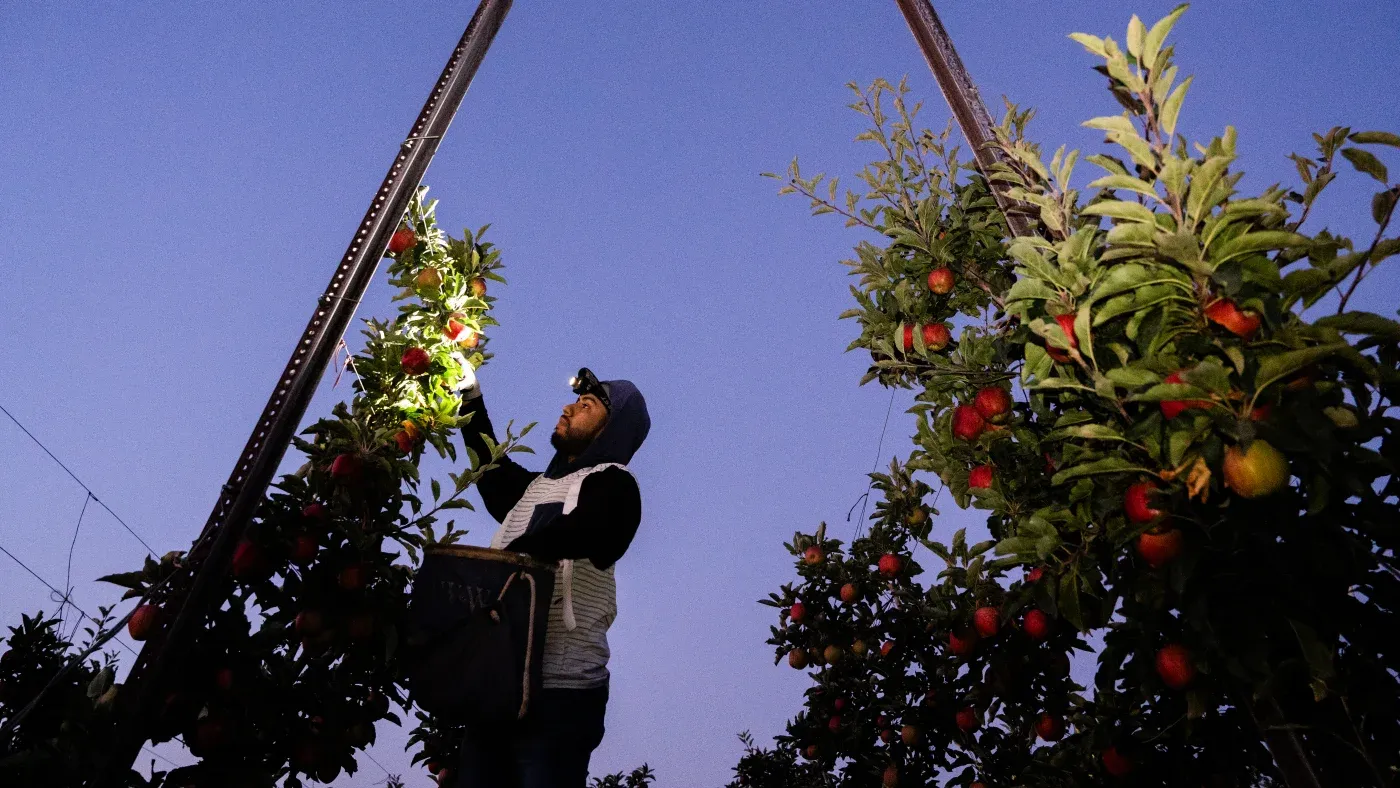
The management of apple orchards requires precise timing and intense manual labor, which becomes harder to sustain as margins shrink. In the Yakima Valley, workers often begin picking in the early summer mornings to manage heat for both the fruit and the staff. When economic conditions fail, the consequences are visible in the fields: unpicked apples are frequently left to rot on branches or the ground, a trend Tynan notes has affected thousands of acres in recent years.
Consolidation and the decline of family-run farms
The landscape of American apple production is shifting from family-owned operations to large, well-funded corporate entities. While Washington's total apple acreage saw slight increases between 2017 and 2022, this figure masks a significant loss of independent growers. Small, family-run farms are increasingly being bought out by private equity and large corporations, which reduces competition in an already tight market.
Jon DeVaney of the Washington State Tree Fruit Association observed that while there was an influx of private equity investment during the 2017–2022 period, the trend has since reversed. The years 2023, 2024, and 2025 have been particularly devastating for growers. For families like the Gilberts, who have managed fruit in Washington since 1898, the current era represents a fundamental threat to a century-old way of life.