How has recent rhetoric impacted the Trump and Zelensky relationship?
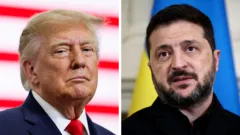
The relationship between Donald Trump and Volodymyr Zelensky has entered a phase of intense verbal hostility, characterized by personal attacks from the US President. Trump has publicly questioned Zelensky's competence, telling Newsmax that the Ukrainian leader is "not a good guy for us to deal with" and claiming he "doesn't know what he's talking about." These comments followed Zelensky's criticism of a recent US decision to strike a diesel deal with Russia, which the Ukrainian leader suggested placed the US on the wrong side of history.
While Trump's diplomatic style is often unpredictable, shifting from criticism to endorsement—as seen with his changing stance on Israel's Benjamin Netanyahu—the current friction appears deeply rooted in policy disagreements. Zelensky has responded with measured but visible frustration, noting to a US congressional delegation that certain American decisions are "hard to explain between friends." He has also pushed back against claims that he is an obstacle to peace, asserting that Ukraine has welcomed every attempt to end the war with dignity.
The pattern of unpredictable diplomacy
Analysts note that Trump's approach often relies on "sledgehammer" rhetoric, making it difficult to discern when personal insults are mere political theater and when they signal a genuine policy shift. Ian Bond of the Centre for European Reform suggests that while Trump is prone to sudden U-turns, the current atmosphere of mutual distrust is particularly damaging to long-term strategic stability.
What is the impact of US policy shifts on Ukraine's defense?
Recent US policy decisions have created significant hurdles for Ukraine's ability to defend its territory against Russian aggression. A primary concern is the dwindling supply of Patriot air defence missiles. Amid a global shortage, reports suggest that only a small number of interceptors remain in Ukraine's stockpile. This shortage is exacerbated by the Trump administration's reported slowing of the approval process for allies to transfer their own stocks to Kyiv.
Furthermore, the White House's recent economic maneuvers have been perceived as a direct rebuke to Ukrainian military strategy. In a move that blindsided Ukrainian negotiators in Miami, President Trump struck a deal with Vladimir Putin to open US markets to Russian diesel. This decision, viewed by some as a move to lower petrol prices ahead of US mid-term elections, appears to penalize Ukraine for its campaign of long-range strikes on Russian oil infrastructure.
The administration's decision to waive sanctions under the Graham Act—named after the late Senator Lindsey Graham—has further fueled fears in Kyiv. By removing these legal barriers just days before they were set to take effect, the US has signaled a willingness to accommodate the Kremlin. Former US ambassador to Kyiv William Taylor described this trend as providing "carrots to the Russians and sticks to the Ukrainians," calling the shift inexplicable.
Why are intelligence and technology concerns rising?
Beyond physical weaponry, the reliability of US intelligence and satellite services has come under intense scrutiny. Kyiv has reported a lack of timely warnings during Russian ballistic missile attacks, with Zelensky noting that critical intelligence was missing during a major strike on October 12. While Secretary of State Marco Rubio attributed a temporary lapse in warnings to a "software problem," the incident has deepened the sense of unreliability.
Similarly, the functionality of Starlink satellite internet has become a point of contention. Ukrainian officials have reported that the system is being throttled, making it difficult for military units to intercept fast-moving, jet-powered Russian drones. Although the White House has denied issuing orders to limit internet access, reports from Reuters suggested the directive originated from within the administration.
The erosion of technical trust
The recurring nature of these technical failures—whether in intelligence sharing or satellite connectivity—points to a systemic breakdown in trust. For a military relying on real-time data to survive high-intensity drone and missile warfare, even the suspicion of intentional interference can be catastrophic for operational planning and soldier safety.
How does historical mistrust shape current tensions?
The current friction is not merely a product of the ongoing war but is deeply connected to a decade of personal and political tension between Donald Trump and the Ukrainian leadership. Much of this mistrust stems from unfounded allegations made during Trump's first presidency regarding election interference and the existence of hidden Democratic National Committee servers in Ukraine.
Zelensky's refusal to comply with Trump's previous demands to investigate political rivals, such as Joe Biden, created a lasting rift. This tension famously culminated in the withholding of $391 million in military assistance, an event that led to Trump's first impeachment. Whether these historical grievances continue to influence the current administration's approach to the war remains an open question, but they provide a volatile foundation for modern US-Ukraine relations.
FAQ: Trump and Zelensky relationship
Is the US still providing military aid to Ukraine?
The US has moved away from financing direct military assistance, instead utilizing a mechanism where European nations pay for American-made equipment. However, critical supplies like Patriot missiles are currently in short supply, and the administration has been accused of slowing down the transfer of stocks from allies.
Why did Trump waive the Graham Act sanctions?
President Trump waived the sanctions contained in the Graham Act to facilitate his efforts to broker a peace deal with Russia. While the administration views this as a diplomatic tool, Ukrainian officials see it as a signal that the US is siding with the Kremlin.
Has US intelligence sharing with Ukraine stopped?
The US government denies that intelligence sharing has been paused. Secretary of State Marco Rubio attributed recent failures in early warning alerts to software issues rather than a deliberate cessation of information flow to the Ukrainian military.
What is the significance of the Russian diesel deal?
The deal to open US markets to Russian diesel is seen as a strategic move to influence US petrol prices ahead of elections. For Ukraine, however, it serves as a rebuke to their strategy of targeting Russian energy infrastructure.
How has Starlink affected the war in Ukraine?
Starlink provides essential internet connectivity for intercepting drones, but Ukrainian officials report that the service is being throttled. This makes it harder to track fast-moving targets, though the White House denies ordering any intentional slowdown of the service.
Key takeaways
The Trump and Zelensky relationship is marked by intense personal and political friction.
US policy shifts, including a Russian diesel deal, are perceived as rebukes to Kyiv.
Critical military resources, specifically Patriot missiles, are facing severe supply shortages.
Historical mistrust from 2019 continues to influence current diplomatic dynamics.
Conclusion
The relationship between Donald Trump and Volodymyr Zelensky has reached a precarious low, characterized by a cycle of personal insults and contradictory policy signals. From the perceived undermining of Ukraine's air defenses to the sudden easing of sanctions on Russia, the administration's actions have left Kyiv feeling increasingly isolated. While diplomatic efforts continue in venues like Oslo, the underlying lack of trust—rooted in both recent strategic shifts and historical grievances—suggests that the partnership remains highly unstable. As the conflict evolves, the consistency of American support remains the most critical uncertainty for Ukraine's survival.