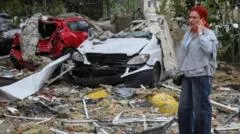
Ukraine peace talks have entered a renewed phase of diplomatic activity following signals from Moscow that it is "ready in principle" to resume negotiations. This development coincides with a missile attack on Kyiv that injured six people, according to Mayor Vitaliy Klitschko. While US President Donald Trump suggested the world is closer to peace than ever, the geopolitical landscape remains volatile. US envoys Steve Witkoff and Jared Kushner are spearheading this push, navigating complex security demands and deteriorating US-Ukraine relations. This article examines the latest diplomatic maneuvers, the proposed frameworks for a ceasefire, and the escalating tensions between Washington and Kyiv.
What is the current status of the Ukraine peace talks?
Russia has indicated a theoretical willingness to return to the negotiating table following high-level meetings involving US special envoys. On Wednesday, Steve Witkoff met with Russian President Vladimir Putin in St Petersburg, a mission that followed Witkoff's discussions with Ukrainian President Volodymyr Zelensky and leaders in Oslo. While the specific details of the proposals remain undisclosed, the diplomatic momentum is driven by a desire to establish a framework for ending the conflict that began with the 2022 invasion.
The timing of these discussions is marked by a stark contrast between diplomatic rhetoric and battlefield reality. As envoys move between capitals, Kyiv remains under fire. On Wednesday night, missile strikes hit several residential areas in the Ukrainian capital, resulting in at least six injuries. This kinetic escalation occurs even as US President Donald Trump claims that negotiations are reaching their closest point yet. However, the path to a formal agreement is obstructed by fundamental disagreements regarding territorial control and future security structures.
The role of US envoys in recent negotiations
The current diplomatic push is being led by Donald Trump's representatives, specifically Steve Witkoff and Jared Kushner. Witkoff's recent itinerary included meetings in Oslo with the leaders of Norway and Finland before proceeding to St Petersburg. This multi-national approach aims to build a consensus among Western allies, though the effectiveness of these efforts is currently being tested by the conflicting demands of the warring parties. Kushner, participating via video link, has expressed optimism about building a framework for "lasting peace, security, and prosperity," even while acknowledging the significant labor required to reach a settlement.
How are the proposed ceasefire and security terms being defined?
President Volodymyr Zelensky has signaled a willingness to consider a deal that would freeze the conflict along the existing front lines. Speaking to Fox News, Zelensky described this as a "ceasefire" or a "stop killings" mechanism, calling it the minimum requirement from Russia at this stage. Under this proposal, the current positions of the combatants would be maintained to halt active hostilities, with more complex discussions regarding long-term security guarantees for Ukraine to follow the cessation of violence.
The Russian perspective on these negotiations presents a different set of priorities and assessments. Yuri Ushakov, an aide to President Putin, characterized the ideas presented during recent talks as not particularly "useful." Russia's primary focus, according to Ushakov, must be the construction of a post-conflict security system that accounts for Russian interests. Furthermore, the Kremlin has maintained a posture of military strength, with Ushakov asserting that Russian troops currently hold the "strategic initiative" and are advancing across the front lines—a claim that Ukraine and its European allies have consistently disputed, citing a tactical stalemate.
Potential venues for upcoming negotiations
Diplomatic channels have pointed toward a potential new round of formal talks scheduled for approximately November 10 in Abu Dhabi, United Arab Emirates. This move toward a neutral third-party location reflects the difficulty of hosting such sensitive discussions within the borders of the combatants or their immediate allies. The success of an Abu Dhabi summit would depend heavily on whether the parties can move past the current impasse regarding the definition of "security" and the legitimacy of the existing front lines.
Why are relations between the US and Ukraine under strain?
A growing rift has emerged between Kyiv and Washington, fueled by disagreements over intelligence sharing, military support, and economic policy. Ukraine has accused the US of withholding critical intelligence regarding Russian ballistic missile launches, which has led to civilian casualties. While US Secretary of State Marco Rubio has dismissed these claims as "scandalous," the tension remains a significant hurdle for the unified front required for successful peace mediation.
The friction extends to the technical and economic dimensions of the war. Ukraine has expressed frustration over perceived restrictions on the Starlink satellite network, which it claims has hampered drone operations. Additionally, the Trump administration's recent policy shifts have drawn criticism from both sides of the aisle. The lifting of certain sanctions on Russia, which allowed diesel to enter the global market, has been viewed by many in Kyiv and Europe as a concession to Moscow. This follows Trump's public suggestions that Ukraine may need a new leadership team to conduct future negotiations.
The impact of US policy on the conflict dynamics
The US administration's approach has introduced new variables into the conflict, particularly regarding fuel prices and energy security. President Trump has linked Ukrainian attacks on Russian oil refineries to rising global fuel costs, a stance that complicates the military strategy of the Ukrainian defense. This economic pressure, combined with the debate over the use of US-provided technology like Starlink, suggests that the alliance between the US and Ukraine is navigating a period of intense recalibration as the focus shifts from active defense to potential settlement.
What recent developments have influenced the diplomatic atmosphere?
The release of Stephen Hubbard, a 74-year-old American citizen, has provided a rare moment of humanitarian cooperation amidst the tension. Hubbard had been serving a prison sentence in Russia for allegedly fighting on behalf of Ukraine. His release, occurring just before the Witkoff-Putin talks, was described by Witkoff as a humanitarian gesture. While US Vice President JD Vance distanced himself from the characterization of Putin as a humanitarian, he emphasized the importance of the diplomatic mission in securing the return of American citizens.
The broader context of these talks is framed by the ongoing territorial struggle. Russia currently controls approximately 20% of Ukrainian territory, a fact that remains the central obstacle to any permanent peace agreement. The shift from active combat to a potential "freeze" represents a significant pivot in strategy for both nations, as they weigh the costs of continued attrition against the political risks of a negotiated settlement that may not satisfy their core territorial or security objectives.
Frequently asked questions
What is the proposed location for the next round of peace talks?
Yuri Ushakov, an aide to President Putin, suggested that a new round of negotiations could take place around November 10 in Abu Dhabi, the capital of the United Arab Emirates. This would serve as a neutral ground for the three-way discussions between Russia, Ukraine, and the United States.
What does President Zelensky mean by a "freeze" of the war?
Zelensky has proposed a ceasefire that would effectively stop the killings by freezing the conflict along the current front lines. This would halt active combat while leaving more complex negotiations regarding long-term security guarantees for Ukraine to be addressed in a subsequent phase of diplomacy.
How has the US responded to accusations of withholding intelligence?
US Secretary of State Marco Rubio has rejected the accusations made by Kyiv, labeling them "scandalous." While Ukraine claimed that a lack of warning regarding ballistic missile launches led to civilian deaths, US officials have maintained that intelligence sharing is functional and that these claims lack merit.
What is the current status of the front lines in Ukraine?
The situation is a point of contention. Russia claims its troops are advancing and hold the "strategic initiative" across the front. Conversely, Ukraine and its European allies describe the current state of the war as a virtual stalemate, with neither side achieving decisive breakthroughs.
Why is there tension regarding the Starlink satellite network?
Ukraine has complained that speed restrictions on the US-owned Starlink network have limited the effectiveness of its drone strikes against Russian targets. While US officials deny requesting such slowdowns, the issue has prompted calls from a bipartisan group of US senators for an investigation.
Key takeaways
- Russia has expressed a "ready in principle" stance toward resuming peace negotiations.
- President Zelensky has proposed a ceasefire that freezes the war at current front lines.
- Diplomatic envoys Steve Witkoff and Jared Kushner are leading US-led peace efforts.
- A potential new round of talks is being considered for November 10 in Abu Dhabi.
- Tensions exist between the US and Ukraine regarding intelligence sharing and Starlink usage.
Conclusion
The path toward ending the Russia-Ukraine war is currently defined by a precarious tension between high-level diplomacy and continued military aggression. While the US-led push through envoys like Steve Witkoff has brought the parties closer to a potential dialogue, the fundamental disagreements over security guarantees and territorial integrity remain unresolved. The proposal for a ceasefire to freeze the front lines offers a possible mechanism for de-escalation, but the deteriorating relationship between Washington and Kyiv poses a significant risk to the cohesion of the negotiating bloc. The upcoming discussions in Abu Dhabi will be a critical test of whether a lasting framework can be constructed.