
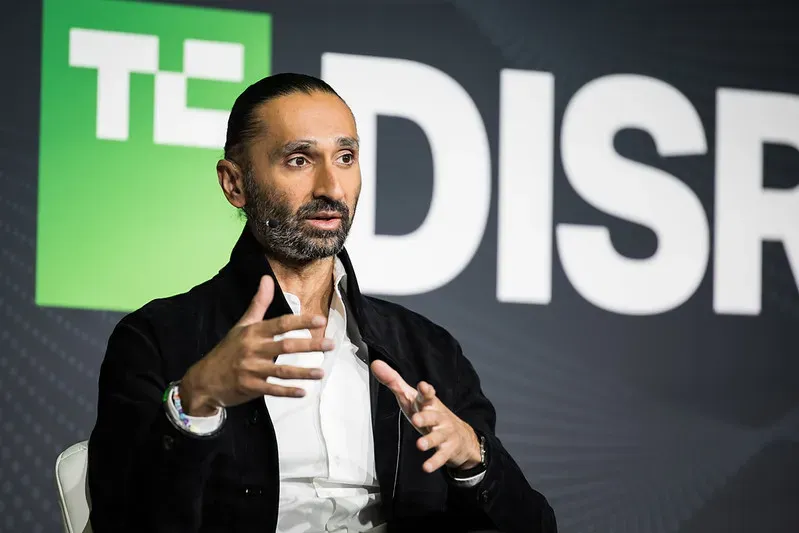
How is Blackstone financing the AI revolution?
Blackstone is leveraging its massive $1.3 trillion asset base to move beyond traditional venture capital by focusing on compute financing and flexible capital structures. Through Blackstone N1 (BXN1), the firm has established a dedicated hub in San Francisco to manage AI-centric initiatives that range from equity investments in frontier models to massive debt facilities for data centers. Unlike the mobile or SaaS eras, which required relatively moderate capital to scale, the AI transition demands staggering amounts of investment for hardware and infrastructure.
According to Jas Khaira, a Blackstone veteran, the firm has become one of the largest owners of compute outside of the major hyperscalers. This strategy involves investing in "neo clouds"—cloud providers that rent out specialized AI GPU infrastructure—and data centers. A notable example of this strategy is the $5 billion commitment to Crux AI, a neocloud launched in partnership with Google to commercialize custom TPUs. Blackstone has also supported chip startups like Etched to secure its position within the AI supply chain.
The strategic importance of Blackstone N1
The creation of BXN1 represents a structural shift in how private equity approaches technology. By relocating leadership to the epicenter of AI development in San Francisco, Blackstone is attempting to capture value at the intersection of hardware deployment and software application. This allows the firm to offer a spectrum of capital, from high-risk equity in emerging models to more stable debt financing for the physical infrastructure that supports them.
What is the neocloud financing model?
The neocloud financing model relies on using high-value hardware and long-term customer contracts as collateral for massive loans. Blackstone pioneered this approach in 2023 with a $2.3 billion loan to CoreWeave, a company that had only $30 million in revenue and minimal profitability at the time of the deal. The loan was secured by CoreWeave's extensive collection of Nvidia GPUs and backed by service contracts with investment-grade clients.
This model has since become a blueprint for the industry. By analyzing the nature of a neocloud's clientele, lenders can price risk based on the creditworthiness of the end-user rather than the startup itself. For instance, if a neocloud has secured contracts with "blue-chip" companies like Microsoft or Meta, the risk is viewed through the lens of those giants. This methodology was applied again when Blackstone co-led a $10 billion credit facility for the Australian GPU provider Firmus earlier this year.
Why are concerns rising over AI infrastructure debt?
Market jitters are increasing due to the sheer volume of debt accumulated by neocloud operators and shifting macroeconomic conditions. CoreWeave's debt, for example, has grown to approximately $50 billion, leading some analysts to question the adequacy of the collateral. Brad Gerstner, founder of Altimeter Capital, noted in a recent CNBC interview that relying solely on GPUs as collateral may no longer be sufficient to justify cheap debt in the current environment.
Several external factors are compounding these internal industry pressures:
- Rising Interest Rates: Interest rates ticked up in September, increasing the baseline cost of borrowing.
- Inflationary Pressures: Hotter-than-expected inflation suggests that borrowing costs may remain elevated for longer.
- Widening Credit Spreads: Lenders are demanding higher premiums on top of base rates, even for tech giants with massive balance sheets.
- Market Volatility: Recent fluctuations have seen CoreWeave shares drop over 20%, while Firmus was forced to scrap its planned IPO on the Australian Securities Exchange after failing to meet valuation expectations.
These pressures suggest that the market is currently struggling to determine the "right price" for neocloud businesses in a high-interest-rate environment.
Is a widespread credit crisis imminent?
Jas Khaira argues that the current AI debt accumulation does not resemble the systemic failures seen in the 2008 banking crisis. The fundamental distinction lies in the quality of the underlying demand. Unlike the subprime mortgages of 2008, the debt financing today's data centers is largely driven by the world's most creditworthy corporations.
Because the vast majority of AI infrastructure is being built to serve hyperscalers, the cash flows supporting the debt are tied to companies with massive earnings and stable balance sheets. While there may be volatility in the neocloud sector, Khaira suggests that the structural necessity of compute prevents a total collapse of the sector. However, he did acknowledge that the return on investment (ROI) for AI adoption is currently "uneven," noting that technology integration often follows a "sawtooth-type pattern" rather than a smooth upward trajectory.
The "Sawtooth" pattern of AI adoption
The sawtooth pattern describes a cycle where there may be periods of massive compute oversupply followed by lulls as companies struggle to integrate the technology effectively. This can create a perception of a bubble to skeptics, even if the underlying demand remains fundamentally strong. For Blackstone, this means managing the timing between infrastructure buildout and actual enterprise ROI.
FAQ: AI Buildout Debt and Blackstone
What is a neocloud?
A neocloud is a specialized cloud service provider that focuses on renting out high-performance AI GPU infrastructure. Unlike traditional hyperscalers, neoclouds are often more agile and specifically optimized for the intensive computational requirements of training and deploying large-scale artificial intelligence models.
How does Blackstone secure its AI loans?
Blackstone secures its loans by using a combination of pledged hardware, such as Nvidia GPUs, and committed customer contracts as collateral. They specifically look for contracts with investment-grade customers like Microsoft or Meta to mitigate the risk of lending to smaller, venture-backed infrastructure providers.
Why did Firmus cancel its IPO?
Firmus scrapped its planned listing on the Australian Securities Exchange because the market valuation was not sufficient. According to Khaira, the market is currently reassessing the appropriate pricing for neocloud businesses in light of rising interest rates and shifting economic conditions.
Is the AI debt bubble a risk to the global economy?
While some analysts express concern over the $50 billion debt levels at companies like CoreWeave, Blackstone argues the risk is contained. They contend that because the debt is ultimately servicing the needs of the world's most creditworthy hyperscalers, it lacks the systemic fragility of the 2008 banking crisis.
What is the "Ode with Anthropic" joint venture?
Ode with Anthropic is a $1.5 billion joint venture involving Blackstone, Anthropic, and Hellman & Friedman. The venture provides forward-deployed engineers to help companies integrate AI into their existing operations, aiming to bridge the gap between having compute power and achieving tangible ROI.
Key takeaways
- Blackstone is leveraging its $1.3 trillion AUM to become a dominant player in AI compute financing.
- Neocloud financing relies on using GPUs and blue-chip customer contracts as collateral for massive loans.
- CoreWeave's debt has reached approximately $50 billion, sparking debates over collateral adequacy.
- Rising interest rates and widening credit spreads are increasing the cost of AI infrastructure development.
- Blackstone views AI debt as lower risk than 2008-era debt due to the creditworthiness of hyperscale users.
The future of AI infrastructure investment
The tension between massive capital expenditure and uncertain ROI defines the current phase of the AI era. While the debt loads of neoclouds are substantial, the fundamental demand for compute remains unyielding. The success of this cycle will likely depend on whether the "sawtooth" pattern of adoption stabilizes and whether the infrastructure built today can deliver the promised efficiencies to the world's largest enterprises. For firms like Blackstone, the goal is to navigate this volatility by betting on the permanence of the AI transition rather than the short-term fluctuations of the credit markets.
