What caused the Toledo train disaster?
Initial findings from the Spanish government point toward significant human error as the primary driver behind the catastrophic collision. Transport Minister Oscar Puente has stated that while the high-speed signaling system, known as LZB, functioned as intended, the subsequent manual intervention failed to prevent the accident.
According to Minister Puente, the technical infrastructure is not to blame. He noted that the LZB system is used in Germany and Austria and is not obsolete. While the system has experienced 170 failures in Spain so far this year, Puente characterized these incidents as normal and consistent with European Union averages. The crisis emerged during the transition from automated to manual control.
The sequence of human error
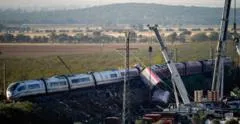
The investigation highlights a breakdown in communication and protocol within the Madrid control center. Audio records and monitoring screens indicated that controllers were aware of the danger, yet the necessary commands to stop the advancing train were never issued. Specifically, a controller instructed a stalled train to restart and proceed at speeds of up to 160km/h (100 mph), despite the presence of another train stuck on the tracks ahead. This decision directly led to the high-speed impact that left wreckage strewn across the tracks and down an embankment.
How is the government responding to the crisis?
The Socialist-led government is attempting to manage the narrative by emphasizing technical facts and distancing the cabinet from direct culpability. Transport Minister Oscar Puente has taken an offensive stance against critics, rejecting claims of chronic underinvestment in national infrastructure. Rather than resigning, Puente has framed his continued tenure as a duty to provide clarity and improve system safety.
The political response has been polarized. The opposition People's Party (PP) has demanded Puente's resignation, characterizing it as a necessary moral and ethical step following the loss of 69 lives. In contrast, the Ministry of Transport has focused on the "objective facts" of the collision, attempting to shift the focus from systemic failure to individual operational mistakes. This strategy aims to protect the broader administration from being held responsible for the specific errors of rail controllers.
What is the impact on Spanish rail safety confidence?
Public trust in the Spanish high-speed rail network has been severely damaged by the frequency of recent accidents. This latest disaster marks the second major high-speed collision in less than a year, following the Cordoba crash in January that killed 46 people. While the causes of the two incidents differ—the Cordoba crash was linked to potential rail cracks, whereas Toledo was attributed to human error—the psychological impact on passengers is identical.
Paco Camas, a pollster from Ipsos, suggests that these recurring tragedies destroy confidence not just in the railways, but in Spanish institutions as a whole. The perception of a recurring pattern of failure creates a sense of national instability. Travelers have expressed profound fear regarding the safety of the AVE high-speed network, with many indicating that their sense of security has been fundamentally compromised by the recent string of fatalities.
How will the disaster affect the upcoming general election?
The Toledo train disaster has significantly diminished the re-election prospects for Prime Minister Pedro Sánchez. Before the crash, Sánchez was attempting to run a positive campaign to mobilize apathetic voters, but the political momentum has shifted toward his opponents. The disaster has replaced policy discussions with an atmosphere of crisis and institutional decay.
Political analysts suggest that the electorate is moving toward the center-right. Professor Pablo Simon of Madrid's Carlos III University noted that the government has lost control of the campaign's emotional tone. Current political simulations indicate a strong advantage for the opposition, with the People's Party (PP) projected to form a coalition with the far-right Vox party in approximately 95% of scenarios.
A convergence of political crises
The rail disaster does not exist in isolation; it is the latest in a series of challenges facing the Sánchez administration. The government has been grappling with several concurrent issues, including:
- Persistent, though denied, allegations of corruption involving relatives of the Prime Minister.
- Social unrest following the viral video of a pensioner's forced eviction.
- Tensions surrounding migrant influxes in the Spanish exclave of Ceuta.
These compounding factors have created what Professor Simon describes as a "general mood of decay," making it increasingly difficult for the Socialist party to present a stable vision for the country's future.
FAQ: Spain train disaster and political fallout
What is the current death toll of the Toledo train crash?
As of the latest reports, 69 bodies have been recovered from the wreckage in central Spain. The disaster involved a high-speed collision on a line south of Madrid, resulting in significant casualties and wreckage distributed along the tracks and down an embankment.
Was the signaling system at fault for the accident?
Transport Minister Oscar Puente has stated that the LZB signaling system was not at fault. He maintained that the system functioned correctly and is a standard technology used in other European nations, suggesting the accident resulted from human error during manual operation.
Who is calling for resignations following the crash?
The opposition People's Party (PP) has called for the resignation of Transport Minister Oscar Puente. They argue that his departure is a necessary moral and ethical response to the tragedy and the loss of life on the rail network.
How does this crash compare to the Cordoba accident?
While both were high-speed rail disasters, their suspected causes differ. The January accident near Cordoba, which killed 46 people, was linked to potential cracks in the rails, whereas the Toledo disaster is currently attributed to human error in the control center.
What are the election projections for Pedro Sánchez?
Recent projections suggest Sánchez's chances have declined significantly. Professor Pablo Simon indicates that most simulations show the center-right PP winning and forming a coalition with the far-right Vox, as the government struggles to manage the current national mood.
Key takeaways
- The Toledo train disaster has resulted in at least 69 confirmed fatalities.
- The government attributes the crash to human error rather than infrastructure failure.
- The incident follows a similar fatal crash near Cordoba that killed 46 people.
- Political analysts predict a significant electoral advantage for the center-right PP.
- Public confidence in Spanish high-speed rail and national institutions has plummeted.
The shifting landscape of Spanish politics
The Toledo train disaster has transformed the Spanish political landscape from a debate over policy into a referendum on institutional competence. For Pedro Sánchez, the accident serves as a catalyst that has amplified existing grievances, from corruption allegations to social unrest. As the nation prepares for a snap election, the focus remains on whether the government can restore confidence in its infrastructure and its ability to lead during a period of perceived national decay.