How is AI driving unprecedented concentration in LP portfolios?
The rapid ascent of artificial intelligence has fundamentally altered the diversification playbook for limited partners. Historically, LPs sought to mitigate risk by spreading capital across diverse managers, sectors, and stages. However, the meteoric rise in valuations for companies such as OpenAI and Anthropic has led to a massive 'pile-in' effect where multiple venture funds are heavily concentrated in the same few winners.
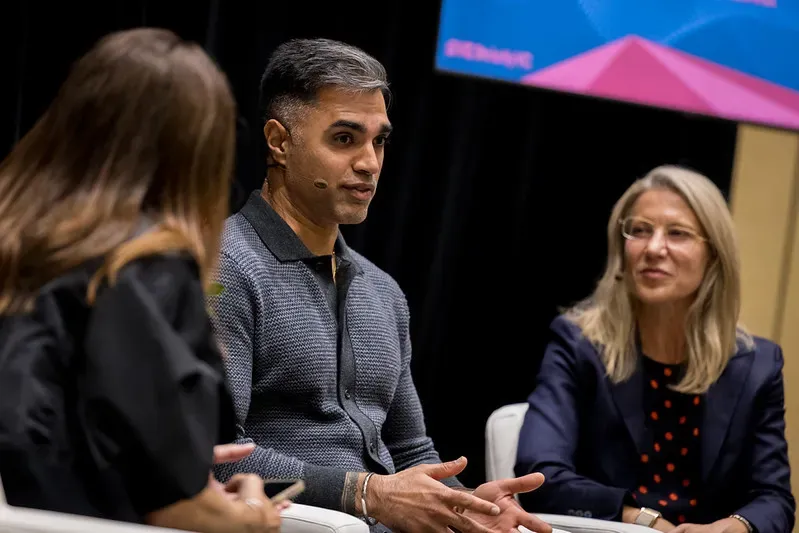
Amit Bhatti of TrueBridge notes that while concentration is often viewed as a risk, venture capital has always been a power law business. In this model, a few massive successes drive the majority of returns. According to Bhatti, seeing a fund consolidate into names like Databricks, SpaceX, or Stripe is a typical feature of maturing funds. The current phenomenon is not necessarily a new structural flaw, but rather the unprecedented speed at which this consolidation is occurring.
Beezer Clarkson of LGT Capital Partners adds a layer of nuance, noting that early-stage funds maintain a higher degree of diversity. Because early-stage capital is smaller and focused on different opportunity sets, they are less susceptible to the massive late-stage concentration seen in larger institutional funds. Nevertheless, for many LPs, the risk of having significant exposure to the same AI giants across multiple different venture managers is a growing reality.
Why is the pace of venture capital fund deployment accelerating?
The traditional timeline for deploying venture capital is undergoing significant compression. While the historical norm for fund deployment was roughly 24 to 36 months, many modern funds are now operating on cycles as short as 12 to 18 months, with some even moving toward one-year pacing.
Several factors contribute to this accelerated speed:
- Increased Round Sizes: As companies like Anthropic raise massive amounts of capital, venture firms must deploy larger checks to maintain meaningful ownership.
- Concentrated Positions: Rather than spreading small amounts across many startups, some managers are taking large, concentrated positions in high-conviction winners.
- Increased Seed Costs: Seed round sizes have reportedly increased by nearly 2x, requiring managers to write larger checks much earlier in the lifecycle.
This rapid pacing acts as a "yellow light" for many LPs. Clarkson suggests that a one-year vintage is inherently difficult to execute correctly, as it leaves less room for error in selection and deployment. Bhatti also highlights the unusual practice of managers bumping up fund sizes mid-cycle to keep up with these larger capital requirements.
The difference between current pacing and previous cycles
It is critical to distinguish the current acceleration from previous periods of rapid deployment. During the crypto boom, accelerated pacing often resulted in investments in zero-revenue speculative assets. In contrast, the current AI-driven cycle is characterized by companies demonstrating rapid revenue growth, with some moving from zero to $100 million in revenue at speeds previously thought impossible in the venture ecosystem.
What are the implications for LP commitment strategies?
Limited partners are forced to adapt their commitment calendars to account for the unpredictable and rapid deployment of their venture managers. When a manager moves significantly faster than the agreed-upon pace, it creates potential liquidity and planning challenges for the LP.
LPs generally employ several strategies to manage these shifts:
- Downsizing Checks: Instead of withdrawing entirely, LPs may reduce the size of their commitments to a manager to compensate for faster deployment.
- Calendar Alignment: LPs are building more rigorous calendars to ensure capital is available when managers unexpectedly move ahead of schedule.
- Maintaining Reliability: Completely sitting out a manager is often avoided, as LPs want to remain "reliable capital" to maintain their seats at the table for future opportunities.
However, the strain on LPs is real. Clarkson points out that some institutional investors, such as endowments, hospitals, and foundations, face significant pressure when capital calls continue without corresponding distributions, making it difficult to meet their own operating commitments.
How is liquidity evolving in the venture ecosystem?
Liquidity is no longer strictly tied to the traditional IPO route, as the venture ecosystem seeks more sophisticated ways to return capital to investors. The emergence of a more robust secondary market is providing essential exit options that do not require a public listing.
The secondary market has become significantly more sophisticated over the last five years. It is no longer just about selling entire funds; it now includes LPs selling stakes in their General Partners (GPs) or selling strips of their specific portfolios. This evolution is vital because the structural reality of the market has shifted; the era of waiting 20 years for an IPO is being replaced by a need for more frequent liquidity events.
Recent years have seen a diversification of exit types. While IPOs remain a goal, significant liquidity is flowing through:
- Large-scale M&A: The market is seeing major acquisitions, including deals in the $10 billion range and even a recent $60 billion exit involving Cursor.
- Secondary Sales: High-profile companies like SpaceX and Cerebras are contributing to a broader flow of liquidity through various private market mechanisms.
For LPs, this increased sophistication is a positive development, as it provides a structural safety valve for a market that is increasingly characterized by longer holding periods and higher valuations.
Frequently asked questions
What is the main risk of AI concentration for LPs?
The primary risk is the loss of diversification. Because many different venture funds are all heavily invested in the same handful of AI companies like OpenAI, an LP might find themselves overexposed to a single sector or a small group of companies across their entire portfolio.
Why are venture funds deploying capital so much faster now?
Deployment is accelerating due to much larger round sizes and the need for managers to write larger checks to secure meaningful stakes in high-valuation AI companies. This has compressed the traditional 24-36 month deployment cycle down to as little as 12-18 months.
How do LPs react when a manager deploys capital too quickly?
LPs often manage this by downsizing their check sizes rather than exiting the relationship entirely. This allows them to maintain their status as reliable capital while adjusting for the fact that the manager is using their allocated capital much faster than anticipated.
Is the current investment cycle better than the 2021 crypto era?
While both involved rapid pacing, the current cycle is viewed differently because the underlying assets are showing massive revenue growth. Unlike the zero-revenue crypto moonshots of the past, today's AI leaders are demonstrating unprecedented commercial scaling.
What role do secondaries play in modern venture capital?
Secondaries provide essential liquidity by allowing LPs and GPs to sell stakes in companies or funds before an IPO. This sophistication is necessary to manage the longer timelines and higher valuations currently present in the private markets.
Key takeaways
- AI concentration is driving LPs to hold similar high-value assets across multiple venture funds.
- Fund deployment cycles have compressed from 2-3 years to as little as 12-18 months.
- Increased seed round sizes and larger late-stage checks are forcing faster capital deployment.
- Liquidity is diversifying beyond IPOs through massive M&A and sophisticated secondary markets.
Conclusion
The venture capital landscape is undergoing a profound transformation driven by the AI revolution. While the concentration of capital in a few massive winners offers the potential for significant returns, it introduces new complexities regarding diversification and fund pacing. The shift toward faster deployment and larger check sizes requires LPs to be more agile and disciplined in their commitment strategies. As liquidity mechanisms like secondaries become more sophisticated, the ecosystem is adapting to a new reality where traditional exit timelines are being rewritten. Ultimately, the current "yellow light" environment demands a careful balance between chasing unprecedented growth and managing the structural risks of a rapidly accelerating market.