What is the purpose of the Ukraine deployment rehearsal?
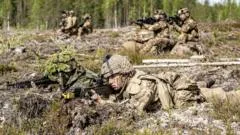
The primary objective of the upcoming military exercise is to test the ability of a multinational coalition to deploy, protect, and supply forces within Ukrainian territory following a cessation of hostilities. Known as Exercise Koalicja, the maneuvers will take place in Poland between November 9 and November 22, 2026. This rehearsal is designed to transform theoretical political security guarantees into a functional, credible military reality.
According to UK Defence Secretary Wes Streeting, the exercise is not merely a hypothetical exercise but a preparation for a "real force" intended to assist Ukraine once active fighting concludes. The goal is to move beyond planning stages and demonstrate that a coalition of willing nations can execute complex logistics and command-and-control operations across land, sea, and air domains.
Testing command and control structures
A critical component of the rehearsal involves ensuring that troops from diverse national backgrounds can operate under a unified command structure. Because the proposed Multi National Force – Ukraine (MNF-U) would consist of various European contingents, the ability to synchronize communication and tactical procedures is essential for operational success in a post-conflict environment.
How will the Multi National Force – Ukraine (MNF-U) operate?
The MNF-U is envisioned as a reassurance force rather than a combat or peacekeeping unit. Western officials have been explicit in defining the boundaries of this mission: the force will not participate in offensive operations, nor will it be tasked with ceasefire monitoring or traditional peacekeeping duties. Crucially, the force is intended to operate independently of NATO command and will not be stationed on the front lines.
Instead, the mission focuses on two core pillars: providing security reassurance to the Ukrainian state and assisting in the rebuilding and professionalization of the Ukrainian armed forces. This distinction is vital for Western leaders seeking to provide stability without directly engaging in the active conflict or triggering a broader escalation with Russia.
Defining the scope of engagement
While the mission is non-offensive, the rules of engagement remain a point of strategic ambiguity. Officials have stated that the force would possess the capability to defend itself if attacked, but they have declined to provide specific details regarding the protocols that would be triggered in the event of an assault by hostile actors. This ambiguity reflects the high-stakes nature of deploying foreign troops in a region where tensions remain acute.
Which nations are participating in Exercise Koalicja?
The exercise involves a coalition of 12 nations, demonstrating a broad European commitment to Ukraine's long-term stability. Britain and France are taking the lead in organizing the maneuvers, with significant contributions from several other European allies. The participation of these nations serves as a signal of collective resolve regarding the future security architecture of Eastern Europe.
The participating countries include:
- United Kingdom
- France
- Belgium
- Estonia
- Germany
- Lithuania
- Netherlands
- Poland
- Spain
- Sweden
- Turkey
The United States has been involved in high-level discussions regarding the formation and purpose of this multinational force, though it is not contributing personnel or assets to the current mission.
Specific national contributions and roles
Each nation brings specialized capabilities to the rehearsal. The United Kingdom is contributing approximately 300 troops along with two RAF Typhoon fighter jets. These aircraft are tasked with simulating the protection of commercial airspace, a vital step toward reopening Ukraine's skies for trade and travel. Turkey has taken a leadership role in the maritime aspect of the mission, with the long-term objective of clearing sea mines to facilitate the resumption of Black Sea trade routes.
What are the geopolitical risks and challenges?
The prospect of stationing foreign troops in Ukraine carries significant escalatory risks, particularly regarding the relationship with the Russian Federation. President Vladimir Putin has previously characterized the presence of foreign military personnel in Ukraine as a provocation, stating that such troops would be considered "legitimate targets." This stance necessitates a highly cautious approach to deployment and mission definition.
Furthermore, there are practical questions regarding the scale and effectiveness of the force. While some military experts suggest that tens of thousands of troops might be required to provide a meaningful security guarantee, the final size and composition of the MNF-U remain undecided. The actual contribution of each nation will depend heavily on the specific circumstances of any future peace agreement and the domestic political landscape of the participating countries.
The training dilemma in a post-war environment
Another complexity involves the training of Ukrainian forces. While the MNF-U aims to help rebuild the Ukrainian military, Ukrainian soldiers are currently highly experienced in modern combat, particularly in drone warfare. There is an ongoing question of how Western forces can effectively provide training to a military that has already been battle-hardened by one of the most intense conflicts of the 21st century.
FAQ: Ukraine deployment rehearsal
What is the main goal of Exercise Koalicja?
The main goal is to rehearse the movement, protection, and supply of a multinational force in Poland. This prepares the coalition to deploy to Ukraine to provide security reassurance and military rebuilding assistance once a peace deal is reached.
Will these troops be part of NATO?
No, Western officials have clarified that the Multi National Force – Ukraine would not operate under the command of NATO. It is designed as a separate coalition of willing nations to provide specific security guarantees to Ukraine.
What roles will the UK and Turkey play?
The UK is providing 300 troops and RAF Typhoons to simulate the protection of commercial airspace. Turkey is leading the maritime mission, which aims to eventually clear mines in the Black Sea to restore trade.
Will the force participate in combat operations?
No, the force is not intended for offensive operations, peacekeeping, or ceasefire monitoring. Its primary purpose is to provide reassurance and assist in the reconstruction of the Ukrainian armed forces.
What has Russia's reaction been to this mission?
Russia has expressed strong opposition to the deployment of foreign troops in Ukraine. President Vladimir Putin has previously warned that any such international forces would be treated as legitimate military targets.
Key takeaways
- Exercise Koalicja involves nearly 3,000 troops from 12 nations rehearsing in Poland.
- The mission is non-offensive, focusing on reassurance and rebuilding Ukrainian forces.
- The UK and France are leading the multinational force coordination.
- Turkey is set to lead maritime efforts to clear Black Sea mines.
- The force will operate independently of NATO command structures.
Conclusion
The upcoming Exercise Koalicja represents a pivotal shift from political rhetoric to military readiness regarding Ukraine's future security. By testing the logistical and command capabilities of a 12-nation coalition, European leaders are attempting to build a credible framework for stability that exists outside of NATO's direct command. However, significant hurdles remain, including the potential for Russian escalation, the undefined rules of engagement, and the complex task of training a battle-hardened Ukrainian military. The success of this multinational force will ultimately depend on the political will of individual nations and the specific terms of any eventual peace agreement.