Why is the US demanding the release of Venezuela political prisoners?
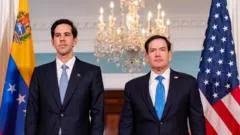
The United States is intensifying pressure on the Venezuelan interim government to free the 322 citizens still held in detention. This diplomatic push was highlighted during a meeting between US Secretary of State Marco Rubio and his Venezuelan counterpart, Oliver Blanco, on Monday. The US State Department indicated that the primary objectives of this dialogue include securing the release of detainees and establishing a framework for free, fair, and credible elections.
The demand for prisoner release is not a new development but a long-standing requirement from the Venezuelan opposition. María Corina Machado, the 2025 Nobel Peace Prize winner, has consistently advocated for the freedom of those detained during periods of political unrest. Since her return to Venezuela on October 25 after a year of exile, Machado has prioritized meeting with the families of those currently in custody.
The humanitarian context of the detentions
Many of the current detainees were arrested in the volatile period following the 2024 presidential election. At that time, the National Electoral Council (CNE), which is largely composed of government loyalists, declared Nicolás Maduro the winner. However, this declaration was contested by independent media and opposition groups who verified voting tallies suggesting an opposition victory. This discrepancy led to significant international scrutiny and domestic unrest.
What is the current status of Nicolás Maduro and the interim government?
Nicolás Maduro is currently facing legal proceedings in the United States following a military raid in Caracas on January 3, 2026. US forces seized Maduro during this operation and transported him to New York, where he is facing trial on charges related to torture and drug trafficking. The seizure marked a radical shift in the country's leadership structure.
Following the removal of Maduro, Delcy Rodríguez, his former vice-president, was sworn in as the interim president of Venezuela. While the Trump administration has provided backing to the Rodríguez presidency, the transition has not been without friction. Opposition parties within the country have expressed growing frustration regarding the perceived slow pace of political and structural reforms necessary for a full democratic transition.
The US three-phase transition plan
The US State Department has reaffirmed its commitment to a specific strategic roadmap designed by President Donald Trump. This plan is structured into three distinct phases intended to guide the country out of its current crisis:
- Stabilization: Establishing immediate order and security within the country.
- Economic Recovery: Addressing the profound financial hardships faced by the Venezuelan population.
- Political Reconciliation and Democratic Transition: Moving toward a legitimate electoral process and the restoration of democratic institutions.
How do election reforms impact the Venezuelan democratic process?
The replacement of Venezuela's current election infrastructure is considered a mandatory prerequisite for any future valid elections. Secretary of State Marco Rubio has emphasized that the overhaul of these institutions cannot be delayed for years. He has insisted that the process must adhere to established timelines to ensure the legitimacy of any upcoming vote.
The current electoral framework is heavily criticized due to its history of bias. During the 2024 elections, the Carter Center, acting as an independent observer, stated that the process could not be classified as democratic. Furthermore, a UN fact-finding mission reported that the government orchestrated harsh repression against anyone perceived as a political opponent or anyone expressing dissent in the months following that contested election.
The debate over electoral timelines
There is currently a lack of consensus between the interim government and the opposition regarding when a new vote should occur. The competing perspectives include:
| Stakeholder | Proposed Timeline / Position |
|---|---|
| Interim President Delcy Rodríguez | Has promised elections under a "renewed" authority but has not provided a specific date. |
| María Corina Machado | Has pushed for elections in 2027, specifically suggesting July 24, 2027, though she has recently softened this to "sometime next year." |
| US State Department | Demands a rapid implementation of new infrastructure according to established timelines. |
What are the primary obstacles to political reconciliation in Venezuela?
The primary obstacle to reconciliation remains the deep-seated mistrust between the interim administration, the opposition, and the international community regarding the integrity of state institutions. While the release of 1,000 prisoners was a significant milestone, the remaining 322 detainees serve as a symbol of the ongoing tension between the government's claims of reform and the opposition's demand for total systemic change.
The transition is further complicated by the need to rebuild an entire electoral apparatus from the ground up. Without a neutral and transparent National Electoral Council, any attempt at a vote is likely to be met with the same skepticism that characterized the 2024 cycle. The speed of these reforms is a central point of contention, with the US demanding urgency and the interim government navigating the complexities of a post-Maduro landscape.