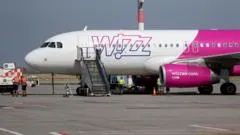
Emergency diversion of Wizz Air flight 4302
The Wizz Air flight scheduled to travel from London Luton Airport to Sofia was diverted to Budapest following a mid-air bomb threat. According to flight tracking website FlightAware, Wizz Air flight 4302 originally departed Luton at 08:33 GMT. While the flight was intended to arrive in the Bulgarian capital at 13:25 local time, the threat necessitated a change in course. The aircraft successfully landed at Budapest Liszt Ferenc International at 12:09 local time, significantly earlier than its scheduled arrival in Sofia.
Upon receiving the threat, the flight crew requested permission to land at the Budapest airport. This request prompted a rapid response from Hungarian defense authorities to secure the airspace and the aircraft. The diversion highlights the high-alert protocols maintained by airlines and national defense forces when passenger safety is potentially compromised by security threats.
Flight timeline details
Data from FlightAware indicates the flight was roughly halfway through its journey when the emergency landing was executed. The deviation from the original flight path ensured that the aircraft reached a major international hub capable of handling specialized security and law enforcement requirements.
Military escort by Hungarian Defence Forces
A Hungarian Gripen fighter jet provided a high-level military escort for the passenger aircraft during its descent into Budapest. Hungarian Defence Minister Romulusz Ruszin-Szendis confirmed that the Hungarian Defence Forces deployed the jet immediately after the threat was reported. According to Ruszin-Szendis, the fighter jet took to the skies within minutes of the flight requesting permission to land in Budapest.
The presence of the Gripen fighter jet served to secure the perimeter of the aircraft as it transitioned from international airspace to the landing zone. Once the passenger plane had safely landed, the military jet returned to its designated base. This coordinated effort between civil aviation and military defense is a standard procedure for managing high-risk security incidents in progress.
The role of the Gripen fighter jet
The deployment of a fighter jet during a commercial flight diversion is a significant security measure. It ensures that the aircraft is monitored and protected from external interference while it navigates the emergency landing process under high-stress conditions.
Security inspections and passenger safety
Authorities in Budapest conducted comprehensive security checks on both the aircraft and its passengers following the emergency landing. A spokesperson for Wizz Air stated that the aircraft was moved to a designated stand to facilitate these necessary inspections. The airline emphasized that they were cooperating fully with local authorities to resolve the situation.
Following the intensive search, Wizz Air confirmed that the inspection had been completed and nothing suspicious was found. The airline reiterated that the safety of its crew and passengers remains its highest priority. Once the security clearance was granted, the aircraft was cleared to depart again, allowing the airline to resume operations for that specific flight. The incident concluded without reports of injuries or further immediate threats to the passengers on board.
Post-landing protocols
The transition from a mid-air threat to a ground-based investigation involves multiple agencies. In this case, once the military escort completed its task, police took charge of the scene to manage the investigation and the passenger disembarkation process.
Coordinated response between airline and law enforcement
The resolution of the Wizz Air bomb threat required seamless communication between the airline, the Hungarian Defence Forces, and local police. The airline’s commitment to cooperating with authorities ensured that the security protocols were followed without delay. This multi-agency approach is critical in aviation security to mitigate risks and provide rapid responses to potential threats.
The incident underscores the complexity of modern aviation security, where a single threat can trigger a response involving international flight tracking, military intervention, and local law enforcement. While the threat proved to be unfounded, the speed of the response highlights the readiness of European aviation security frameworks to handle potential emergencies.