Who are the main contenders in the 2026 race?
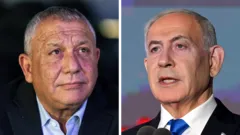
Benjamin Netanyahu and Gadi Eisenkot are currently leading the race for prime minister in a tight contest. Netanyahu, the incumbent, is attempting to maintain his position by framing himself as 'Mr. Security,' citing strategic successes in the various conflicts Israel has faced since 2023. His government is noted as the most right-wing in the country's history, requiring the support of far-right coalition partners to remain in power.
Gadi Eisenkot, representing the Yashar Party formed last year, has gained significant traction due to his military background and relative newcomer status in the political arena. Eisenkot, who resigned from the war cabinet in 2024 over disagreements regarding the conflict in Gaza, has centered his campaign on demanding accountability for the security lapses of 7 October. His popularity is bolstered by his military credentials and his personal experience as a father who lost a son during the Gaza war.
The spectrum of opposition and coalition partners
While Netanyahu and Eisenkot lead the polls, several other figures will influence the formation of any future government:
- Naftali Bennett and Avigdor Lieberman: Both right-wing leaders who advocate for hardline security stances and permanent Israeli control over much of the occupied West Bank.
- Yair Golan: A left-wing leader who supports Israeli withdrawal from significant portions of the West Bank.
- Arab party blocs: Representing approximately one-fifth of Israel's population, these parties could theoretically act as kingmakers, though most major Jewish parties have excluded them from potential coalitions.
The complexity of these alliances means that even if a clear winner emerges, the ability to form a stable majority remains uncertain.
How does the Israeli voting system work?
The Israeli parliament, known as the Knesset, consists of 120 seats, requiring a minimum of 61 seats to form a functional government. Israel utilizes a proportional representation system, which fundamentally dictates that governments are almost always coalitions comprised of multiple political parties.
This structural reality often leads to prolonged periods of political instability following an election. Because parties must negotiate for concessions and strike deals to reach a majority, it can take weeks or even months to establish a new administration. If no single bloc can secure the necessary 61 seats, the country may be forced to operate under a minority government.
The historical precedent for such difficulty is significant. Between 2019 and 2022, Israel underwent five separate elections due to the inability of various parties to cooperate effectively. This cycle of instability remains a central concern for voters as they head to the polls in October 2026.
What are the primary issues driving the campaign?
Security remains the most dominant theme of the election, following the devastating impact of the 7 October 2023 attacks. In that event, nearly 1,200 people were killed and 251 individuals were taken hostage into Gaza. Most challengers to Netanyahu have focused their critiques on the security failures that allowed such an attack to occur.
Beyond immediate security concerns, several domestic issues are shaping voter sentiment:
- Conscription: The exemption of ultra-Orthodox Jewish men from military service, which has historically been a standard practice, has become a deeply divisive topic during the current state of war.
- Judicial Reform: Netanyahu's administration continues to pursue controversial changes to the judicial system. These plans, which sparked mass protests prior to 7 October, are viewed by critics as a threat to the independence of the judiciary and the foundations of Israeli democracy.
- Cost of Living: Like many nations, Israel is grappling with economic pressures, specifically the steady rise in food and housing costs in recent years.
What will the election mean for Palestinians in Gaza and the West Bank?
The outcome of the election will directly influence the lives of Palestinians, given the ongoing military activity and settlement expansion. In Gaza, Israel continues to conduct near-daily strikes targeting Hamas operatives, maintaining control over more than half of the territory. According to the Hamas-run health ministry—figures considered reliable by the UN—more than 74,000 people have been killed in Israeli attacks since 7 October 2023.
In the West Bank, the situation is characterized by rapid settlement expansion and an all-time high in attacks by Jewish settlers, according to UN records. The political direction of Israel will dictate the intensity and nature of these developments.
Comparing the stances of Netanyahu and Eisenkot on Palestinian territories
While the two leading candidates differ on many domestic issues, they share some common ground regarding Gaza, yet diverge significantly on the West Bank.
| Issue | Benjamin Netanyahu's Position | Gadi Eisenkot's Position |
|---|---|---|
| Gaza Policy | Supports the Trump peace plan; aims for Hamas disarmament in exchange for phased withdrawal. | Supports the Trump peace plan; pledged to end Hamas rule within 18 months, potentially via military means. |
| West Bank Settlements | Advocates for continued settlement expansion. | Supports settlements in general but opposes the E1 project and unauthorized outposts. |
| Two-State Solution | Has long opposed the creation of an independent Palestinian state. | Not explicitly campaigned on by either leading party in this cycle. |
Eisenkot has expressed a desire to create conditions for a final peace settlement and to crack down on extremist settlers, whereas Netanyahu's camp remains committed to the expansion of Israeli presence in the territory.
When can the results be finalized?
Voters can expect the first indications of the election outcome via exit polls published at 22:00 local time on election day. However, these figures are projections and may not reflect the final tally. Preliminary results are typically expected the following day, with the official results scheduled for publication on 4 November.
The post-election process is managed by President Isaac Herzog, who will consult with party leaders to determine who has the best opportunity to form a government. If the initial attempt fails, the President may grant other leaders the opportunity to form a coalition. If multiple attempts fail, the Knesset may call for new elections, potentially repeating the cycle of political deadlock seen in previous years.
FAQ: Israel elections 2026
How many seats are needed to form a government in Israel?
A government must secure at least 61 seats in the 120-seat Knesset to command a majority. Because Israel uses proportional representation, this usually requires the formation of a coalition between several different political parties rather than a single party winning an outright majority.
Who is the main challenger to Benjamin Netanyahu?
Gadi Eisenkot, the founder of the Yashar Party and a former head of the Israel Defense Forces, is currently the primary challenger. He has built his campaign on the need for accountability regarding the security failures of 7 October and has gained significant popularity since entering politics.
What is the impact of the election on the West Bank?
The election will likely determine the pace of settlement expansion and the level of enforcement against extremist settlers. Netanyahu's camp generally supports continued expansion, while Eisenkot opposes certain controversial projects like the E1 settlement and seeks to crack down on unauthorized outposts.
Why is judicial reform a major campaign issue?
Judicial reform is a central issue because the Netanyahu government's proposed changes to the legal system are seen by critics as a threat to judicial independence. These reforms led to significant domestic unrest and mass protests prior to the 7 October attacks.
Can Arab parties influence the formation of a government?
Arab parties, representing about one-fifth of the population, could theoretically serve as kingmakers in a coalition. However, most leading Jewish parties have stated they will not enter into a governing coalition with these blocs, limiting their practical influence in forming a majority.
Key takeaways
- The election features a tight race between incumbent Benjamin Netanyahu and challenger Gadi Eisenkot.
- Israel's proportional representation system often leads to long delays in forming coalition governments.
- Security, judicial reform, and the cost of living are the primary domestic campaign drivers.
- The election outcome will significantly impact settlement policy and military activity in Gaza and the West Bank.
Conclusion
The 2026 Israel elections represent a critical juncture for both domestic stability and regional security. With a highly polarized electorate and a complex proportional representation system, the path to a stable government remains fraught with the potential for political deadlock. The contest between Netanyahu’s focus on security continuity and Eisenkot’s call for accountability will likely decide not only the leadership of the Knesset but also the trajectory of Israel's relationship with the Palestinian territories and its broader role in the Middle East.