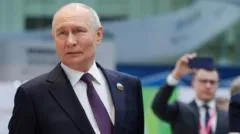
Elon Musk and Vladimir Putin satellite talks have established a pragmatic communication channel between the Russian President and the SpaceX founder. During the Russia-Africa Summit in Moscow, President Putin described Musk as a "real genius" and confirmed that Russia remains in "close" contact with him regarding satellite technology. This dialogue aims to coordinate the deployment of SpaceX's Starlink and Russia's emerging Rassvet satellite project to prevent orbital interference. While political tensions remain high, the technical necessity of managing satellite constellations has prompted direct engagement between the Kremlin and American commercial space interests.
Why are Elon Musk and Vladimir Putin discussing satellite technology?
The primary driver for the recent communications between Vladimir Putin and Elon Musk is the technical necessity of managing orbital space. As private and state-led satellite constellations expand, the risk of signal interference and physical collision increases. President Putin specifically noted that maintaining contact with Musk is essential to ensure that the Russian Rassvet project and the American Starlink system do not "interfere with each other in orbit."
This coordination represents a pragmatic approach to space management that transcends current geopolitical friction. Despite the ongoing conflict in Ukraine and broader diplomatic tensions, the shared physical environment of Low Earth Orbit (LEO) requires a level of technical synchronicity. Putin emphasized that both Russia and its American partners value this cooperation, stating that they are working hard on these technical matters despite "all the political questions."
The technical scale of Starlink versus Rassvet
The disparity in the scale of these two satellite networks is significant. According to SpaceX, Starlink has already launched approximately 13,000 satellites into orbit. In contrast, online satellite trackers indicate that the Russian Rassvet project currently operates with only a couple of dozen satellites. The Russian Embassy in South Africa has characterized Rassvet as "Russia's Starlink alternative," noting that the project is still in its early stages. This vast difference in constellation size underscores why the coordination of frequency and orbital paths is critical to prevent the much larger Starlink network from disrupting Russian communications.
What is the significance of the Rassvet satellite project?
Rassvet is Russia's strategic initiative to establish a sovereign satellite internet capability. Described by the Russian Embassy in South Africa as the country's "first steps" in the field of satellite internet, the project aims to provide widespread connectivity through orbital platforms. By developing Rassvet, Russia seeks to reduce its reliance on foreign-controlled telecommunications infrastructure, which has become a vulnerability in the modern era of digital warfare and geopolitical maneuvering.
The development of Rassvet serves two main purposes: domestic connectivity and strategic autonomy. For a nation like Russia, having a dedicated satellite internet network ensures that communication channels remain open even if international commercial services are restricted or withdrawn due to sanctions. While the project is currently much smaller than its American counterpart, it represents a long-term effort to compete in the rapidly evolving commercial space sector.
How have US-Russia relations shifted regarding space and energy?
The dialogue between Putin and Musk occurs against a backdrop of shifting US-Russia dynamics. While the invasion of Ukraine has historically driven these nations apart, recent developments suggest a complex interplay of economic and diplomatic maneuvering. The context of these satellite talks is framed by broader shifts in US policy, including recent moves by the Trump administration regarding energy imports and sanctions.
Recent geopolitical shifts include the following:
- Energy Agreements: US President Donald Trump announced a deal to import diesel from Russia to mitigate high domestic gas prices caused by the conflict in Iran.
- Sanctions Relief: The US administration waived certain sanctions that were previously scheduled to take effect against Russia.
- Diplomatic Exchanges: The release of a US citizen from Russian custody, coupled with comments from US envoy Steve Witkoff describing Putin as a "humanitarian," suggests a softening of certain diplomatic stances.
These developments create a landscape where commercial entities like SpaceX can navigate a more fluid relationship between the two superpowers, even as military and political conflicts persist.
What role does Elon Musk play in this geopolitical landscape?
Elon Musk occupies a unique position as both a commercial space pioneer and a significant political actor in the United States. His companies, including SpaceX and Tesla, are based in America, with major operations in California and Texas. However, his influence extends far beyond commercial aerospace, as he has become a major financier and ally for the Republican Party and Donald Trump.
Musk's role in international conflict has been demonstrated through the deployment of Starlink. During the Ukraine war, Starlink became a critical tool for Ukrainian military connectivity. However, this involvement has not been without controversy. Musk has previously admitted to intentionally limiting Starlink connectivity in certain instances, highlighting the immense power a single private individual holds over the tactical capabilities of sovereign nations.
The intersection of business and politics
The intersection of Musk's business interests and his political affiliations creates a complex layer of diplomacy. As a billionaire who is often described as an "off and on again trillionaire," his decisions regarding satellite deployment can have immediate impacts on battlefield dynamics. This reality forces world leaders like Putin to engage with him not just as a CEO, but as a strategic stakeholder in global security and communications infrastructure.
FAQ: Elon Musk and Vladimir Putin Satellite Talks
Why did Putin call Elon Musk a "genius"?
President Putin used the term "real genius" to describe Musk during the Russia-Africa Summit in Moscow. This praise was contextualized within the need for technical cooperation regarding satellite technology, specifically to ensure that Russian and American satellite networks do not interfere with one another in orbit.
What is the difference between Starlink and Rassvet?
Starlink is a massive satellite internet constellation operated by SpaceX, with roughly 13,000 satellites currently in orbit. Rassvet is Russia's emerging alternative, which is currently in its early stages with only a few dozen satellites active, according to satellite tracking data and Russian embassy statements.
Can satellite networks interfere with each other?
Yes, satellite networks can interfere with each other through signal overlap or physical proximity in orbit. This is why both Russia and the US seek to maintain contact; to coordinate orbital paths and frequencies to prevent technical disruptions between systems like Starlink and Rassvet.
How does Starlink impact the war in Ukraine?
Starlink has been a vital communication tool for Ukraine's military efforts. However, the service is controlled by a private entity, and Elon Musk has admitted to making intentional decisions regarding the availability of connectivity, which underscores the geopolitical weight of private satellite constellations.
Is Russia's space technology catching up to the US?
While Russia is actively developing the Rassvet project to compete in the satellite internet market, it is currently in the early stages. The scale of the Russian project is significantly smaller than the 13,000-satellite Starlink network operated by the American company SpaceX.
Key takeaways
- Putin and Musk are in close contact to prevent Starlink and Rassvet satellites from interfering in orbit.
- Starlink currently operates approximately 13,000 satellites, while the Russian Rassvet project has only a few dozen.
- The dialogue occurs amidst shifting US-Russia relations involving energy deals and sanctions waivers.
- Elon Musk's role in satellite connectivity has significant implications for both commercial and military operations.
The future of orbital coordination
The interaction between Elon Musk and Vladimir Putin highlights a growing reality in modern geopolitics: the necessity of technical cooperation in shared environments, even between adversaries. As the number of satellites in Low Earth Orbit continues to grow, the ability of nations and private corporations to coordinate will become a fundamental requirement for space safety. While the political landscape remains volatile, the technical requirement to prevent orbital interference provides a rare, pragmatic channel for engagement between the US and Russia.