What are the technical capabilities of the new Su-35 jets?
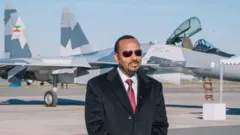
The Su-35 fighter jets provide Ethiopia with advanced air-to-air and air-to-ground combat capabilities. These aircraft are designed for high manoeuvrability and long-range scanning, allowing for significant air superiority over large territories. According to Prime Minister Abiy Ahmed, the jets are capable of detecting and neutralizing incoming cruise missiles at distances of up to 200km (124 miles).
Military intelligence analyst Qalaab Segatu noted that the integration of these jets, alongside planned S-400 air defence systems, creates a robust shield for the country. This capability is specifically intended to protect major urban centers and vital strategic assets, such as the Renaissance Dam. By combining fourth-generation aircraft with existing drone technology from Turkey and China, Ethiopia aims to build a multi-layered deterrent against both internal and external threats.
How does this acquisition impact regional security?
The arrival of advanced combat technology signals Ethiopia's preparation for potential interstate warfare rather than just domestic policing. Military analyst Qalaab Segatu suggested that the acquisition is a key indicator that the country is bracing for conflicts with neighboring nations. This comes at a time of heightened tension in the Tigray region, where fighting between the government and the Tigray People's Liberation Front (TPLF) has resurfaced.
The geopolitical landscape is further complicated by several factors:
- Eritrean Tensions: Ethiopia accuses Eritrea of supporting the TPLF, a claim Eritrea denies.
- Maritime Access: Prime Minister Abiy Ahmed has described Ethiopia's lack of direct sea access as an "existential question," which Eritrea perceives as a threat to its sovereignty.
- Border Instability: The intensification of fighting in Tigray, which borders Eritrea, increases the risk of a wider regional conflagration.
What is the nature of the Ethiopia-Russia military relationship?
The delivery of the Su-35 jets is part of a long-standing strategic partnership between Addis Ababa and Moscow. Prime Minister Abiy Ahmed, currently attending the Russia-Africa summit in Moscow, referred to Russian President Vladimir Putin as a "close friend of Ethiopia." This relationship is underpinned by several military agreements, including a 2021 deal focused on technological improvement and military training.
The Prime Minister emphasized that acquiring such advanced technology is a necessity for regional survival. He stated that countries with sufficient military preparation are less likely to be defied by external actors. This procurement strategy reflects a broader trend in Ethiopia to move beyond drone-centric warfare toward high-end, fourth-generation aerial combat capabilities to ensure long-term national security.
Frequently asked questions
Which aircraft did Ethiopia recently receive from Russia?
Ethiopia has received 12 Su-35 fighter jets from Russia. These aircraft are equipped for both air-to-air and air-to-ground combat and can detect cruise missiles at distances of up to 200km.
What other Russian military hardware is Ethiopia planning to buy?
In addition to the Su-35 jets, Prime Minister Abiy Ahmed announced plans to acquire four S-400 air defence systems from Moscow to protect critical infrastructure and major cities.
Why is this acquisition happening now?
The acquisition coincides with intensified fighting in the Tigray region and growing regional tensions. The government views these advanced systems as essential for protecting the country from external threats and ensuring national survival.
Key takeaways
- Ethiopia has received 12 Russian Su-35 fighter jets to enhance its combat capacity.
- The Su-35 jets can detect and neutralize cruise missiles up to 200km away.
- Plans are underway to acquire four S-400 air defence systems from Russia.
- The move signals Ethiopia's readiness for potential conflicts with neighboring countries.
Conclusion
The acquisition of Su-35 fighter jets and the planned procurement of S-400 systems mark a significant shift in Ethiopia's military posture. By transitioning toward advanced fourth-generation combat technology, Addis Ababa seeks to secure its borders and protect vital infrastructure like the Renaissance Dam. However, this buildup occurs amidst volatile regional dynamics, including the Tigray conflict and maritime disputes with Eritrea. While the hardware provides a technological milestone, it also underscores the growing military alignment between Ethiopia and Russia, potentially altering the security balance in sub-Saharan Africa.