Why did fighting resume in the Kherson region?
Military operations resumed in the Kherson region on Monday morning, immediately following the expiration of a six-day humanitarian truce. Local authorities confirmed that Russian strikes targeted a medical facility located in the center of Kherson city. The resumption of hostilities also resulted in civilian casualties; specifically, a 62-year-old woman and a 73-year-old man were injured when a Russian drone struck a vehicle they were occupying.
While the ceasefire provided a brief respite, both sides have accused the other of using the quiet period to prepare for further combat. The Ukrainian General Staff reported that Russian forces utilized the pause to rotate military units, expand anti-drone equipment along roadways, and deliver fresh ammunition to the front lines. This assessment was met with a degree of corroboration from the Kremlin.
Allegations of military repositioning
The tension regarding the truce's purpose highlights a fundamental distrust between the combatants. According to the Ukrainian General Staff, the observed movement of Russian troops was not merely defensive but part of a strategic effort to strengthen their tactical positions before the fighting resumed. This included the deployment of more sophisticated electronic warfare or anti-drone assets on key transit routes.
Dmitry Peskov, the Kremlin spokesman, addressed these claims by stating it was "reasonable to assume that the Ukrainian army also used this period for the necessary regrouping." He characterized such movements as "completely standard practice" in active conflict zones. This mutual accusation suggests that neither side viewed the ceasefire as a step toward permanent peace, but rather as a tactical window for logistical preparation.
How did the Oleshky truce impact civilians?
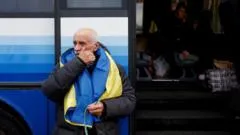
The primary humanitarian achievement of the ceasefire was the successful evacuation of hundreds of residents from the Russian-occupied town of Oleshky. For many, the six-day pause represented the first opportunity in years to escape the hardships of living under occupation. On Saturday, evacuees arrived in northern Ukraine, where many were reunited with relatives they had not seen for several years.
The accounts from those who managed to leave were marked by descriptions of prolonged hunger and the destruction of their community. However, the truce did not result in a total exodus. Many residents chose to remain in Oleshky, and according to Yana Lantratova, Russia's human rights ombudsman, those staying behind are set to receive monthly humanitarian aid deliveries. This provision was noted as a specific outcome of the mediation efforts.
What role did Melania Trump play in the mediation?
The ceasefire was brokered through the involvement of US First Lady Melania Trump, a detail that has fueled significant geopolitical analysis. While the specific mechanics of her involvement remain undisclosed, both Kyiv and Moscow expressed gratitude for her role in facilitating the pause. The truce's existence is widely seen as being tied to her diplomatic influence.
Political analysts suggest that the timing and observance of the truce were influenced by the relationship between the US administration and the Kremlin. By adhering to the ceasefire, Moscow likely sought to avoid undermining its efforts to maintain a functional relationship with her husband, US President Donald Trump. Furthermore, the truce occurred just days before the US midterm elections on Tuesday.
Political calculations and the US election cycle
Commentators have noted that the ceasefire served multiple political purposes. In Russia, some media figures suggested that the truce provided a "success story" for the US President's family ahead of the American elections. Artyom Sheynin, a figure on Russian state television, remarked that representatives might feel compelled to "play along" with the First Lady to create a positive narrative for the US political landscape.
Ukraine's compliance was similarly driven by strategic necessity. Despite the complexities of US-Ukraine relations, Kyiv remains heavily dependent on American intelligence and Patriot air defense systems. Maintaining a cooperative stance with the US administration is vital for Ukraine to ensure the continued flow of military aid required to protect its airspace and infrastructure from ongoing Russian assaults.
Can this ceasefire serve as a blueprint for future truces?
Despite the cooperation seen between human rights officials, the long-term viability of such truces remains highly uncertain. An unusual level of professional coordination was observed between Yana Lantratova, Russia's human rights ombudsman, and Dmytro Lubinets, Ukraine's counterpart. The two officials traveled into Oleshky together and were filmed interacting with local residents, a rare moment of bilateral cooperation.
Both officials have advocated for similar humanitarian initiatives to be implemented in other conflict zones. However, the Kremlin has already moved to limit the scope of this success. Dmitry Peskov dismissed the idea of expanding such truces, labeling the Oleshky agreement an "isolated case" that would not influence the broader "settlement process"—a term often used to describe the current state of stalled peace negotiations.
The wider context of the war suggests that the Kherson truce was a localized exception rather than a shift in military strategy. While Oleshky experienced a brief period of quiet, Russian air strikes continued across other parts of Ukraine, targeting civilian populations and critical infrastructure. This divergence indicates that the broader trajectory of the conflict remains unchanged by the localized humanitarian pause.
FAQ: Kherson ceasefire and Oleshky truce
What was the main purpose of the Kherson ceasefire?
The primary objective was humanitarian. The six-day pause was designed to allow for the evacuation of civilians from the Russian-occupied town of Oleshky and to facilitate the delivery of essential humanitarian aid to those remaining in the area.
Who brokered the ceasefire agreement?
The ceasefire was brokered by US First Lady Melania Trump. While the specific details of her mediation were not released, both the Ukrainian and Russian governments publicly thanked her for her role in securing the humanitarian pause.
Did the ceasefire stop fighting across all of Ukraine?
No. The ceasefire was specifically localized to the Kherson region and the town of Oleshky. Throughout the period, Russian air strikes continued in other parts of Ukraine, resulting in civilian deaths and the destruction of infrastructure elsewhere.
What happened after the ceasefire expired?
Fighting resumed immediately on Monday morning. Reports indicated that Russian strikes hit a medical facility in Kherson city, and a drone attack on a civilian vehicle resulted in injuries to two elderly individuals.
Will there be more ceasefires like this in the future?
It is uncertain. While Ukrainian and Russian human rights ombudsmen called for more such initiatives, the Kremlin has dismissed the Oleshky truce as an isolated event that will not impact the wider peace settlement process.
Key takeaways
- The Kherson ceasefire was the longest truce in the region since the 2022 invasion began.
- The truce allowed hundreds of residents in Oleshky to evacuate to northern Ukraine.
- Melania Trump acted as the mediator for the six-day humanitarian pause.
- Both sides were accused of using the pause for military repositioning and resupply.
- The Kremlin has described the Oleshky truce as an isolated case rather than a pattern.
Conclusion
The Oleshky ceasefire provided a vital, if fleeting, humanitarian window that saved hundreds of lives and allowed for much-needed civilian evacuations. However, the immediate resumption of hostilities in Kherson underscores the profound difficulty of establishing lasting truces in the current conflict. While the mediation by Melania Trump demonstrated a rare moment of diplomatic utility, the underlying military objectives of both Kyiv and Moscow remain unchanged. As the war continues to impact both civilian populations and critical infrastructure, the localized success in Oleshky stands as a testament to the potential for humanitarian pauses, even as the broader conflict remains unresolved.