What does María Corina Machado's return mean for Venezuela?
María Corina Machado's return signifies a potential acceleration of the political transition in a country currently governed by an interim administration. After spending ten months in exile, the Nobel Peace Prize laureate has re-entered the domestic political arena, signaling a direct challenge to the current leadership structure. Her presence on the ground provides a centralized figure for the opposition, which has been fragmented since the removal of the previous regime.
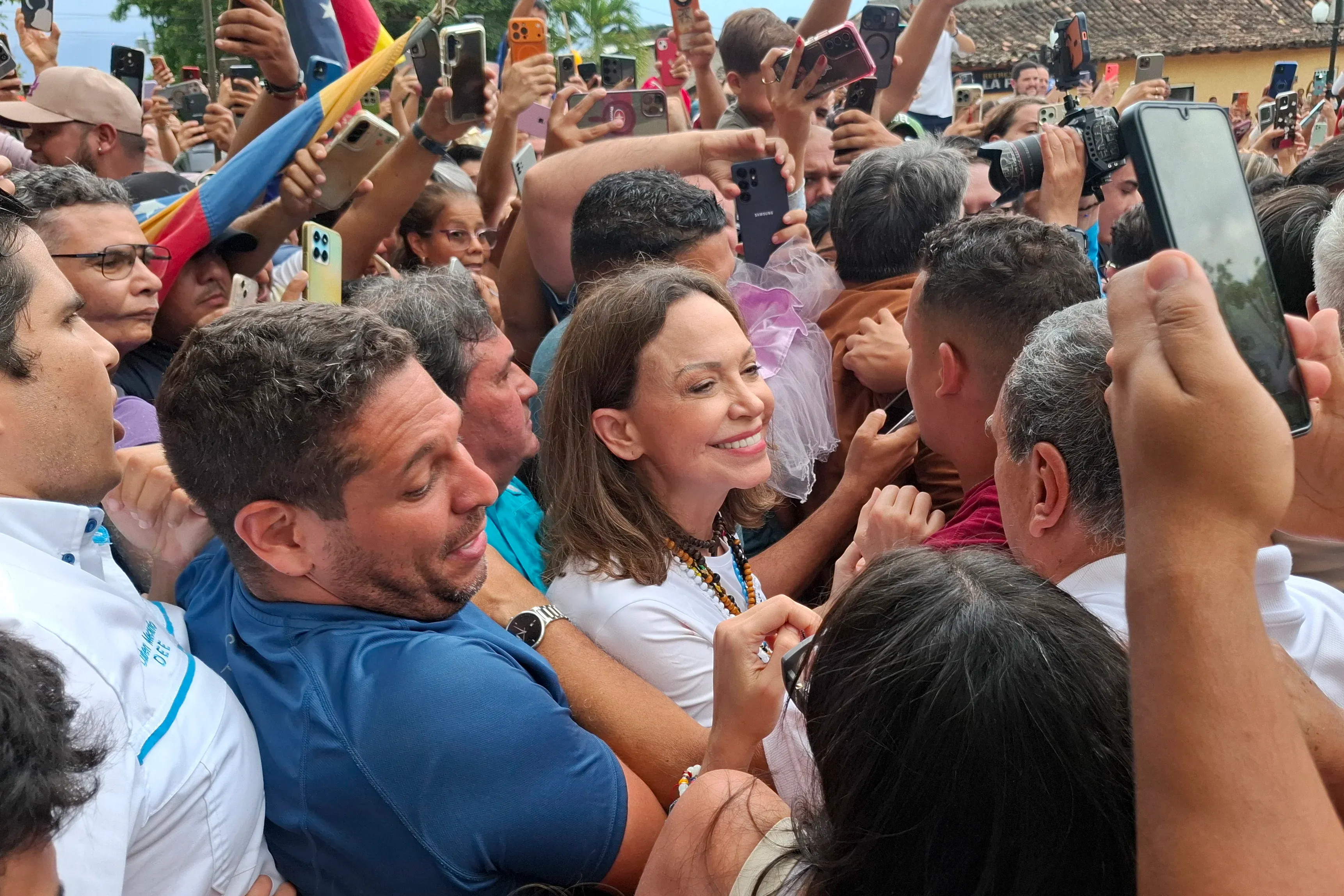
The return is particularly impactful given the recent vacuum left by the capture of former leader Nicolás Maduro in January 2026. While the interim government under Delcy Rodríguez maintains control, Machado’s arrival in locations such as Barquisimeto and Caracas has triggered immediate, large-scale public demonstrations of support. This grassroots mobilization serves as a visible counterweight to the interim government's authority.
The immediate public reaction
The emotional reception of Machado in Lara state and the capital city highlights the deep-seated desire for leadership among the Venezuelan populace. In Barquisimeto, her appearance at the Church of Santa Rosa drew an ecstatic congregation, while in Caracas, hundreds of supporters swarmed her vehicle. These events are not merely symbolic; they represent a reassertion of the opposition's presence in the public sphere, which is critical for any movement seeking to influence national policy or electoral processes.
How has the U.S. government responded to her arrival?
The United States government has maintained a complex and somewhat cautious stance regarding Machado's role in the Venezuelan transition. While the Trump administration has previously sidelined her prominence within the opposition, current officials are framing her return within the context of broader diplomatic efforts. President Trump expressed personal goodwill toward her, describing her as a "very nice woman" and noting his interaction with her regarding her Nobel Prize, though he claimed to have no prior knowledge of her specific return timing.
Despite the President's personal comments, the official diplomatic line is being articulated through the State Department. Secretary of State Marco Rubio has characterized Machado's return as a direct consequence of U.S.-supported reconciliation talks. This framing suggests that the return is part of a managed political process intended to lead to peaceful, enduring democracy rather than an unplanned disruption.
The tension between stability and elections
A significant point of friction exists between the opposition's demands and Washington's strategic priorities. Machado has consistently advocated for the immediate holding of elections. However, the U.S. position has been that Venezuela must first achieve a level of domestic stability before such a process can be safely or fairly implemented. This creates a delicate balancing act for the administration: supporting a democratic leader like Machado while ensuring that her return does not trigger renewed instability that could undermine U.S. interests in the region.
What is the role of exiled opposition figures like Edmundo González?
Exiled opposition leaders, most notably Edmundo González, view Machado's return as a pivotal moment for the sovereign voice of the Venezuelan people. González, who contested the disputed 2024 presidential election and currently resides in Spain, has validated the importance of this day, stating that Machado's presence is essential to guide the country through its current political process.
The coordination between Machado and González is seen as a necessary step for the opposition to present a unified front. González has indicated his intention to join Machado in Venezuela in the near future. This potential reunion of the two primary opposition figures is intended to provide the momentum required to move the country toward a definitive transition of power.
The path toward a unified opposition
For the opposition to succeed, the transition from individual leaders in exile to a cohesive domestic movement is vital. The synergy between Machado's physical presence in Venezuela and González's international political standing could create a dual-track strategy: domestic mobilization paired with international diplomatic pressure. This approach aims to force the interim government to adhere to the terms of the reconciliation talks mentioned by Secretary Rubio.
How did Machado's journey to exile and return unfold?
María Corina Machado's recent history is defined by a period of intense political pressure and clandestine movements. In January 2025, she was forced into hiding within Venezuela following a brief detention during a protest. This period of internal concealment preceded her eventual escape from the country, which was described as a clandestine operation.
Her subsequent time abroad was marked by international recognition of her struggle against authoritarianism. In December 2025, she was awarded the Nobel Peace Prize in Norway, a distinction that elevated her status from a domestic opposition leader to a global symbol of peaceful resistance. Her return on October 25, 2026, completes a cycle that began with her being a fugitive within her own borders and ends with her returning as an internationally recognized laureate.
FAQ: María Corina Machado's Return
Why did María Corina Machado go into exile?
Machado went into exile following a period of significant political danger in Venezuela. After being briefly detained during a protest in January 2025, she was forced into hiding before eventually making a clandestine escape from the country to avoid further persecution by the Maduro regime.
What is the current political status of Venezuela?
Venezuela is currently under an interim presidency led by Delcy Rodríguez. This administration took power following the capture of former leader Nicolás Maduro by U.S. forces in January 2026. The country is currently undergoing a delicate reconciliation process aimed at establishing a permanent democracy.
How does the U.S. view Machado's political role?
The U.S. view is multifaceted. While the Trump administration has previously sidelined her, Secretary of State Marco Rubio has linked her return to U.S.-supported reconciliation talks. The U.S. officially expects political freedoms to be respected and for all actors to support peaceful democratic processes.
Who is Edmundo González?
Edmundo González is a prominent Venezuelan opposition figure who ran against Nicolás Maduro in the disputed 2024 presidential election. He is currently living in exile in Spain and remains a key figure in the movement to restore democratic processes in Venezuela.
What is the significance of the Nobel Peace Prize for Machado?
The Nobel Peace Prize, awarded to Machado in December 2025 in Norway, provides her with significant international legitimacy. It recognizes her peaceful challenge to the authoritarian government in Venezuela and provides her with a global platform to advocate for democratic reforms.
Key takeaways
- María Corina Machado returned to Venezuela on October 25, 2026, after ten months of exile.
- The Nobel Peace Prize laureate's return follows the January 2026 capture of Nicolás Maduro.
- Secretary of State Marco Rubio linked her return to U.S.-supported reconciliation talks.
- Opposition leader Edmundo González plans to join Machado in Venezuela soon.
- The interim government is currently led by President Delcy Rodríguez.
The future of Venezuelan democracy
The return of María Corina Machado introduces a new era of volatility and hope for the Venezuelan political transition. While the interim government under Delcy Rodríguez faces a renewed challenge to its authority, the presence of a Nobel laureate on the ground provides the opposition with unprecedented domestic momentum. The success of this period will depend on whether the reconciliation talks supported by the United States can translate into a structured, fair, and stable electoral process that satisfies both the Venezuelan people and the international community.