What caused the collision near Urda?
The accident occurred when a high-speed Renfe train collided with a stationary Iryo train on the same track in central Spain. The impact was severe enough to cause carriages to derail, leading to a significant number of casualties and widespread destruction at the site near Urda. Emergency services responded to the scene on Wednesday morning to manage the wreckage and assist the injured.
According to reports, more than 100 people sustained injuries during the crash, with many of these individuals listed in serious condition. The collision between the two high-speed services has raised immediate questions regarding rail safety protocols and the technical circumstances that allowed two trains to occupy the same section of track simultaneously.
The scale of the impact
The derailment caused extensive damage to the rolling stock of both Renfe and Iryo. Beyond the immediate physical destruction, the accident has caused significant disruption to the regional rail network. Emergency responders have focused on extracting passengers from the derailed carriages, a process complicated by the severity of the impact.
Who are the prominent victims of the crash?
The crash has claimed the lives of several notable individuals from the fields of sports, politics, and law enforcement. Among the most high-profile victims is Fátima Báñez, a former Spanish government minister, and Julieta Gallego, a rising star in Spanish athletics.
The loss of these figures has prompted widespread mourning across different sectors of Spanish society. The diversity of the victims' backgrounds—ranging from civil servants to professional athletes—underscores the widespread impact of the tragedy on the national community.
Fátima Báñez: A significant political legacy
Fátima Báñez, 59, was a major figure in Spanish politics, having served as the employment minister under former Prime Minister Mariano Rajoy from 2011 to 2018. As the first woman to hold this position, her tenure was marked by significant legislative shifts. In 2012, she introduced labor reforms intended to increase company flexibility regarding dismissals, a move that triggered extensive public protests across Spain. Following her death, the Spanish Confederation of Business Organizations (CEOE), which she chaired, released a statement praising her warmth and commitment to the business community. Madrid regional president Isabel Díaz Ayuso also paid tribute, noting that Spain has lost a significant political figure.
Julieta Gallego: A loss to Spanish athletics
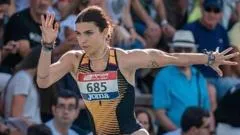
The athletics community is mourning the death of 24-year-old Julieta Gallego, a talented long jumper. Gallego competed for the Madrid-based athletics club, AD Sprint, and was a regular participant in Spanish club championships. According to reports from ABC, her personal best in the long jump was 5.9 meters (approximately 19 feet 3 inches). The Royal Spanish Athletics Federation (RFEF) confirmed her passing, with RFEF president Raúl Chapado describing the death as a blow to the heart of the athletics family, noting that a life with great potential was unjustly extinguished.
How is the identification process being managed?
The identification of the deceased is currently being handled by forensic experts in Toledo. Due to the nature of the accident, authorities have requested DNA samples from family members to ensure accurate identification of the victims.
The bodies of those killed have been transported to the main forensics institute in Toledo. This centralized approach is intended to provide clarity to families who are currently searching for relatives in hospitals throughout the region. The process is critical as officials work to confirm the final death toll, which may rise as more information becomes available from the wreckage and hospital records.
Law enforcement and professional casualties
The crash also claimed the lives of dedicated public servants and professionals. The Civil Guard confirmed the death of 31-year-old officer José Manuel Chacón, expressing condolences to his colleagues and family. Additionally, the legal and tax sectors have lost Antonio Montero Domínguez, a finance and tax lawyer described by the news outlet El Derecho as a meticulous and tireless professional. Montero Domínguez previously served as an inspector for Spain's tax authority between 2012 and 2016.
What is the context of rail safety in Spain?
This incident represents the second major rail disaster in Spain within the current year and stands as the most significant rail accident in the country since 2013. The occurrence of two major accidents in a short timeframe has placed renewed scrutiny on the safety of high-speed rail corridors.
The collision between a moving Renfe train and a stationary Iryo train suggests a critical failure in signaling or track management. While the specific technical cause is still under investigation, the scale of the tragedy has reignited debates regarding the infrastructure and safety redundancies required for high-speed rail operations in the region.
Frequently asked questions
How many people died in the Urda train crash?
As of the latest reports, 69 people have been confirmed dead following the collision near Urda. However, authorities have cautioned that this figure may increase as search and recovery efforts continue and as more victims are identified through the forensic process in Toledo.
What caused the Renfe and Iryo trains to collide?
The collision occurred because a high-speed Renfe train entered the same track as a stationary Iryo train. While the exact technical cause is still being investigated, the accident resulted in a massive derailment and at least 100 injuries across both train sets.
Who was Fátima Báñez?
Fátima Báñez was a prominent Spanish politician who served as the Minister of Employment from 2011 to 2018 under Prime Minister Mariano Rajoy. She was the first woman to hold that role and later became the chair of the Spanish Confederation of Business Organizations (CEOE).
Who was Julieta Gallego?
Julieta Gallego was a 24-year-old Spanish long jumper who competed for the Madrid athletics club, AD Sprint. She was a recognized athlete in Spanish club championships, with a recorded personal best jump of 5.9 meters.
Where are the victims being identified?
The bodies of the victims have been taken to the main forensics institute in Toledo. Families are currently providing DNA samples to forensic experts to assist in the formal identification of their relatives following the crash.
Key takeaways
- The train collision near Urda resulted in 69 confirmed fatalities and over 100 injuries.
- The accident involved a high-speed Renfe train colliding with a stationary Iryo train.
- Notable victims include former employment minister Fátima Báñez and athlete Julieta Gallego.
- This is Spain's worst rail disaster since 2013 and the second this year.
- Forensic teams in Toledo are using DNA sampling to identify the deceased.
Conclusion
The train crash near Urda is a profound tragedy that has shaken Spain, claiming the lives of 69 individuals including prominent public figures and promising young athletes. The collision between Renfe and Iryo services highlights critical concerns regarding high-speed rail safety and infrastructure management. As forensic teams in Toledo work to identify the victims and families search for answers, the nation faces a period of intense mourning and scrutiny. The investigation into the technical causes of the collision will be essential in preventing such a catastrophic event from occurring again in the future.