Why has Delhi air quality declined so sharply?
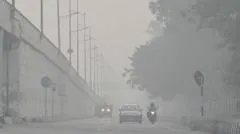
The sudden deterioration in Delhi air quality follows an unusually clean October, which saw the city's lowest average AQI for the month in eight years. This recent decline is primarily attributed to a combination of meteorological shifts and seasonal agricultural practices. As temperatures fall, wind speeds have slowed, preventing the dispersion of pollutants that were previously cleared by recent storms and rain.
Experts identify several converging factors that have created this hazardous environment:
- Crop Residue Burning: Increased burning of stubble in the neighboring states of Punjab and Haryana is transporting smoke directly toward the capital.
- Meteorological Stagnation: The return of northwesterly winds and low wind speeds has trapped pollutants near the ground.
- Anthropogenic Sources: Continued emissions from vehicle exhaust and industrial activities contribute to the baseline pollution.
The current situation is particularly precarious because the seasonal transition coincides with the Diwali festival, which traditionally introduces a massive influx of fine particles and harmful gases into the atmosphere through celebratory activities.
What are the health risks associated with the current AQI?
The Air Quality Index (AQI) in Delhi has crossed the 300 threshold, placing it firmly in the "very poor" category. On Wednesday morning, the index stood at 377. The primary concern for health officials is the concentration of PM2.5, which consists of fine particulate matter approximately 30 times smaller than the width of a human hair. These particles are dangerous because they can penetrate deep into the lungs and enter the bloodstream.
Prolonged exposure to these levels of pollution can lead to severe respiratory issues and exacerbate pre-existing chronic illnesses. Vulnerable populations, specifically children and the elderly, face the highest risk of acute health complications during these spikes in particulate matter.
Understanding the AQI scale in India
India's pollution watchdog uses specific classifications to communicate risk levels to the public. Readings between 301 and 400 are categorized as "very poor," while any reading exceeding 400 is classified as "severe." The current reading of 377 indicates that the city is approaching the severe threshold, necessitating immediate intervention.
How is the government responding through GRAP Stage II?
Authorities have invoked Stage II of the Graded Response Action Plan (GRAP), a set of progressively stricter emergency measures designed to curb pollution as levels rise. The implementation of Stage II focuses on reducing dust, managing vehicle emissions, and easing traffic congestion to lower the concentration of pollutants.
Key measures introduced under this stage include:
- Public Transport Enhancements: The Delhi Metro has added 20 additional weekday train trips to accommodate more passengers.
- Traffic Management: Authorities have been directed to stagger government office timings to reduce the number of vehicles on the road during peak hours.
- Urban Maintenance: More intensive road cleaning protocols have been implemented to minimize dust.
- Economic Deterrents: Higher parking charges have been introduced to discourage the use of private vehicles.
During periods of extreme severity, the government also employs more drastic social measures, such as hybrid schooling models and work-from-home arrangements to minimize human movement and vehicular density.
What are the legal restrictions on Diwali fireworks?
The Supreme Court of India has issued specific directives to manage the impact of Diwali celebrations on air quality. While the court has previously attempted outright bans on the manufacture and sale of certain fireworks, enforcement remains a significant challenge. For the 2026 Diwali weekend, the court has permitted the use of "green firecrackers" under highly controlled conditions.
The legal framework for the upcoming celebrations includes the following mandates:
- Time Restrictions: Certified green firecrackers may only be used between 06:00 and 07:00, and between 20:00 and 22:00 on November 7 and 8.
- Silence Zones: A strict ban on all fireworks is in effect within 300 meters of hospitals, schools, and care homes.
- Verification Requirements: Green firecrackers must feature QR codes that allow authorities to verify their manufacturer and certification status.
Despite these regulations, the Supreme Court acknowledged that conventional, more polluting firecrackers continue to be sold as green alternatives. To combat this, police have been directed to patrol sales areas, conduct random QR-code inspections, and seize any illegal stock.
The challenge of "Green" firecrackers
Green firecrackers are designed with modified chemical formulations intended to produce fewer emissions than traditional varieties. However, the efficacy of these products is often undermined by the illicit sale of standard fireworks labeled as "green." This creates a regulatory loophole that authorities are struggling to close through physical patrols and digital verification.
Is the pollution crisis limited to Delhi?
The pollution crisis is not confined to the National Capital Region, as other major Indian cities are experiencing elevated levels. Mumbai, India's financial hub, recently recorded an AQI of 322 on October 24, which also placed it in the "very poor" category. While Mumbai typically benefits from coastal winds that help disperse pollutants, recent conditions have neutralized this advantage.
In Mumbai, the spike was attributed to a combination of construction dust, garbage burning, and low wind speeds. However, there has been recent improvement in the coastal city; by Wednesday, Mumbai's AQI had dropped to 89, which is classified as "satisfactory." In contrast, the neighboring Navi Mumbai recorded a "moderate" AQI of 118.
Frequently asked questions
What is PM2.5 and why is it dangerous?
PM2.5 refers to fine particulate matter with a diameter of less than 2.5 micrometers. These particles are small enough to bypass the body's natural defenses, penetrating deep into the lungs and potentially entering the bloodstream, causing respiratory and cardiovascular issues.
What is the Graded Response Action Plan (GRAP)?
GRAP is a set of emergency measures used in India to tackle air pollution. The plan is divided into stages that trigger automatically as the Air Quality Index reaches specific thresholds, becoming increasingly restrictive as the air quality worsens.
What makes a firecracker "green"?
Green firecrackers use modified chemical compositions designed to release fewer harmful emissions than traditional fireworks. To be legally recognized, they must also carry a QR code for manufacturer verification and certification tracking by authorities.
Why does pollution increase during winter in North India?
Winter brings falling temperatures and lower wind speeds, which trap pollutants near the ground. This effect is compounded by seasonal crop residue burning in neighboring states like Punjab and Haryana, which sends smoke toward urban centers.
How does the Supreme Court regulate Diwali fireworks?
The Supreme Court regulates fireworks by setting specific time windows for their use, designating silence zones around sensitive areas like hospitals, and mandating the use of certified green firecrackers that can be verified via QR codes.
Key takeaways
- Delhi's AQI reached 377, entering the "very poor" category ahead of Diwali.
- Stage II of the GRAP has been activated to mitigate rising pollution levels.
- The Supreme Court has restricted green firecracker use to specific time windows.
- PM2.5 levels are a primary health concern due to their ability to penetrate lungs.
- Crop residue burning in Punjab and Haryana contributes to the regional smog.
Conclusion
The convergence of seasonal meteorological changes, agricultural burning, and the upcoming Diwali festivities has placed Delhi in a precarious public health position. With the AQI reaching 377, the activation of GRAP Stage II is a necessary but challenging response to mitigate the risks of PM2.5 exposure. While the Supreme Court's regulations on green firecrackers aim to reduce the seasonal spike in emissions, the difficulty of enforcement remains a critical hurdle. As the city navigates this period, the effectiveness of both government interventions and legal mandates will be vital in protecting the health of millions of residents.