How large was the turnout for the French protests?
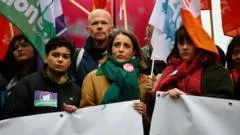
More than 600,000 protesters took part in rallies and marches across France on Thursday, according to data released by the French interior ministry. This figure represents a significant escalation in civil unrest, though estimates vary widely depending on the source. The left-wing CGT union provided a much higher estimate, claiming that 1.57 million people participated in the mobilization. According to the CGT, this represents a level of engagement unmatched since 2023, with major demonstrations occurring in key urban centers including Paris, Marseille, Bordeaux, and Lille.
To put this scale into perspective, the turnout on Thursday exceeded the figures from the previous major day of action on October 17. During that October event, the interior ministry reported 550,000 participants, while unions estimated the crowd at 800,000. The current surge suggests a deepening of social discontent that has been building since September, when initial protests focused on the conditions within high schools (lycées) before expanding to universities and the broader workforce.
Comparing protest scale and participation
The disparity between government and union figures is a recurring theme in French social movements. While the interior ministry provides a more conservative count, the unions argue that their figures better reflect the widespread nature of the discontent. The current mobilization is characterized by a coalition of unions across both the public and private sectors, specifically targeting the government's economic policies.
What are the primary demands of the striking unions?
The central driver of the French protests is the demand for increased purchasing power, specifically through a rise in the minimum wage, known as the Smic. Currently, the Smic stands at €12.31 per hour. Beyond the base rate, union leaders are advocating for significant net increases to combat the rising cost of living that has affected workers, pensioners, and students alike.
Marylise Léon, the head of the CFDT union, specified that the movement is seeking more than just a marginal adjustment to the minimum wage. She explained that the unions are demanding a net increase of €100 per month to provide meaningful relief to households. This demand is coupled with broader calls for increased investment in public services, which protesters argue have been under-resourced.
- Wage Increases: A push to raise the Smic above its current €12.31 hourly rate.
- Net Income: A specific demand for an additional €100 per month in net earnings.
- Public Services: Increased funding for education, healthcare, and general infrastructure.
- Cost of Living: Measures to mitigate the impact of rising prices on daily essentials.
How did the protests impact public services and the economy?
The strikes caused widespread disruption across France's essential infrastructure, affecting everything from transportation to energy production. Government figures indicated that approximately 9.89% of civil servants participated in the strikes, leading to significant service interruptions. In Paris, major cultural landmarks such as the Eiffel Tower and certain exhibition rooms at the Louvre museum were forced to close to the public.
The economic impact extended to the industrial and energy sectors as well. Workers were instructed to halt production at several oil refineries. Furthermore, the disruption at nuclear power plants meant that France was expected to become a net importer of electricity on Thursday, as domestic production fell short of demand due to the industrial action.
Disruption in the education sector
The education system faced particularly heavy strain during the day of action. According to the education ministry, 16% of teachers participated in the strike. However, the unions reported a much more severe impact on the ground, stating that disruption affected more than one in four high schools (lycées) and the vast majority of universities. Alice De Brito, vice-president of the Unef student union, emphasized that the struggle is not limited to education but encompasses all public services in the country.
What was the level of violence and police response?
While the overall scale of the protests was high, the level of violence was noted as being less severe than the widespread looting and arson seen on October 17. Nevertheless, significant clashes occurred in several cities, prompting Interior Minister Laurent Nuñez to deploy 70,000 police officers to maintain order. The minister had previously vowed an "extremely firm response" to any potential outbreaks of violence.
Specific incidents of unrest were reported in several locations:
- Lyon: A car was set on fire near the Gallieni bridge following clashes between police and hundreds of activists from the radical left-wing "black bloc."
- Rennes: A "hostile group of masked individuals" gathered in front of the main union march, according to the local prefect.
- Bordeaux: Police utilized tear gas to clear a square during the demonstrations.
- Seine-Saint-Denis: A student was injured in a stabbing incident during a high-school blockade in this northern Paris suburb.
How is the French government responding to the unrest?
Prime Minister Sébastien Lecornu has announced a "social conference" scheduled for the following Monday to address the grievances of the protesters. This meeting will involve both unions and employers, with the aim of providing answers regarding wages and the general purchasing power of French citizens. The government is attempting to find a middle ground between addressing public anger and maintaining fiscal discipline.
The government's ability to maneuver is constrained by significant economic pressures. France is currently working to reduce its budget deficit to 5% of GDP, a goal that requires tens of billions of euros in savings. To mitigate some of the immediate anger over high prices, the government has previously taken steps such as releasing 10 million barrels of diesel from strategic reserves to lower fuel costs. Additionally, they have promised reforms to the Parcoursup university admissions platform, with a goal of full replacement by 2028.
FAQ: French protests
Why are the unions striking in France?
The unions are striking to demand higher wages and better funding for public services. Specifically, they are seeking an increase in the Smic (minimum wage) and a net monthly increase of €100 to help citizens cope with the rising cost of living and inflation.
What is the scale of the current protests?
The scale varies by source. The French interior ministry reported that over 600,000 people participated in the rallies. However, the CGT union estimated the turnout was much higher, at approximately 1.57 million people across the country.
How has the strike affected daily life in France?
The strikes have caused significant disruption to schools, hospitals, and public transportation. Major landmarks like the Eiffel Tower and the Louvre were closed, and the nation faced potential electricity shortages due to disruptions at nuclear power plants.
What is the government's plan to resolve the conflict?
Prime Minister Sébastien Lecornu is convening a "social conference" with employers and unions. This meeting is intended to discuss solutions for wages and purchasing power while the government attempts to manage a significant budget deficit.
Is there a risk of further protests?
Yes, the unrest is expected to continue. The revived "yellow-vest" (gilets jaunes) movement has called for additional blockades and protests on the Friday and Saturday following the main day of action.
Key takeaways
- Over 600,000 people participated in nationwide French protests on Thursday.
- Unions are demanding a rise in the Smic and a €100 monthly net increase.
- Strikes caused disruptions in schools, hospitals, and the electricity supply.
- The government is facing pressure to balance wage increases with deficit reduction.
Conclusion
The recent surge in French protests highlights a profound period of social tension driven by economic instability and dissatisfaction with public service funding. While the government attempts to navigate a narrow path between fiscal responsibility and social appeasement, the scale of the mobilization—ranging from civil servant strikes to the revival of the yellow-vest movement—suggests that the crisis is far from resolved. The upcoming social conference will be a critical moment in determining whether the administration can address the fundamental demands for higher wages and improved living standards without compromising its broader economic objectives.