What makes the College of Magic Cape Town unique?
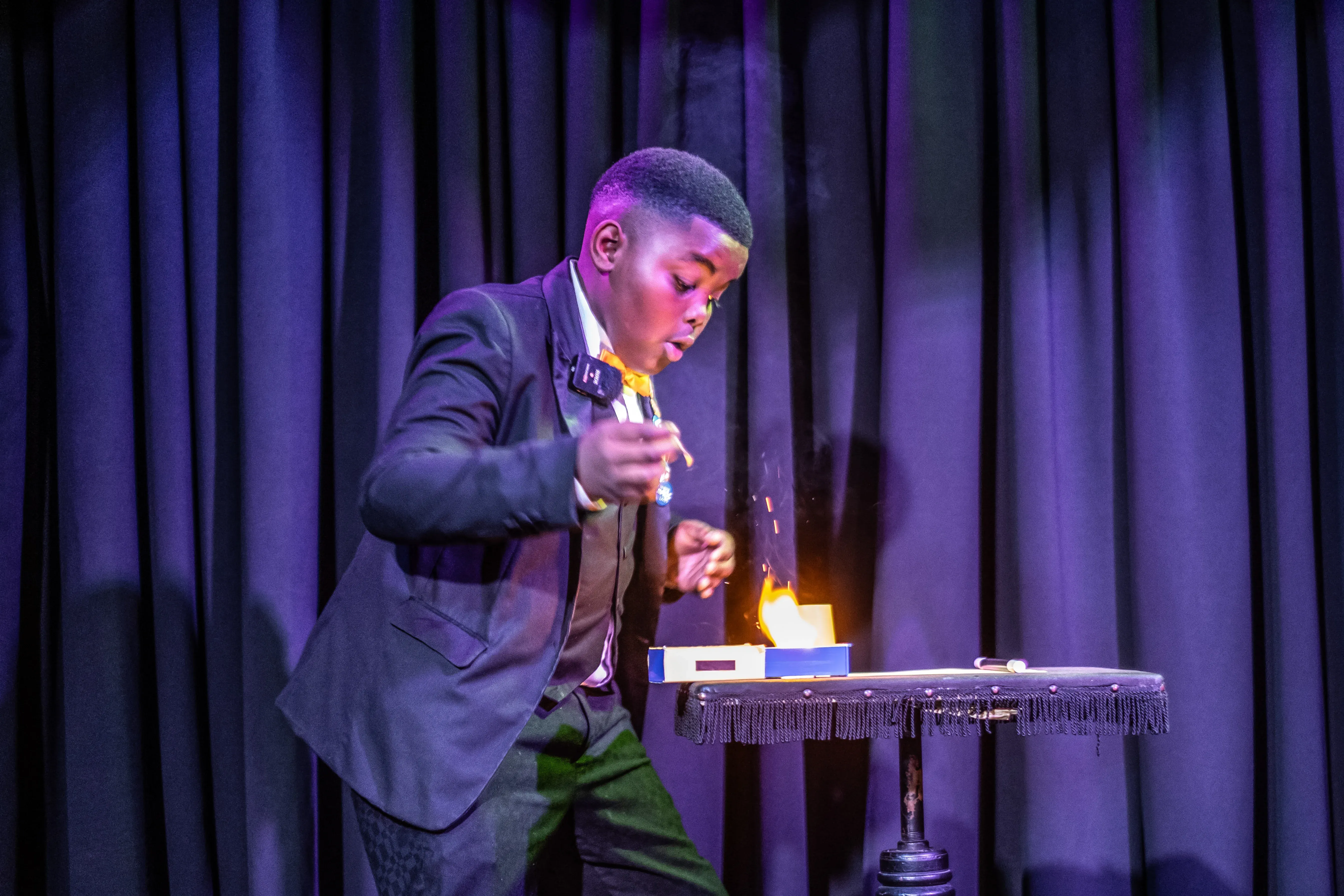
The College of Magic Cape Town functions as a specialized performing arts hub, often described as a real-world 'Hogwarts' for the African continent. It is the only school in Africa dedicated specifically to training youthful stage magicians and illusionists. Every Saturday, the Victorian mansion in a quiet Cape Town suburb becomes a center of activity for roughly 190 students. These young performers, ranging in age from 10 to 18, engage in a wide variety of disciplines designed to build a complete entertainer.
The curriculum is comprehensive, covering skills that extend far beyond simple card tricks. Students participate in classes such as:
- Puppetry and mime
- Clowning and juggling
- Mentalism and stage magic
- Escapology and illusions
- Theater production
This multidisciplinary approach ensures that students develop the diverse toolkit required for professional stage work. The campus itself is a testament to this dedication, with display cabinets housing an array of magic wands, silk scarves, handcuffs, and various trophies earned by students in international competitions.
How did the school defy apartheid laws?
The College of Magic was established as a multiracial institution during a period when South African law strictly enforced racial segregation. Founded in 1980 by David Gore, the school intentionally ignored the apartheid-era mandates that prevented students of different races from sharing public spaces or educational environments. At the time, such a policy made the organization technically illegal.
David Gore, who was a law student at the time of the school's founding, sought to create a space where young people could connect through a shared passion. According to Gore, the school provided an opportunity for individuals from diverse backgrounds to learn about and understand one another through the common language of magic. This mission of integration has persisted for nearly five decades.
A legacy of social integration
While Cape Town remains a city deeply divided by socioeconomic and racial lines, the college acts as a unique equalizer. Gore notes that while students may arrive in vastly different circumstances—some in luxury vehicles and others via collective taxis—they all participate in the same classes and use the same equipment. This shared experience helps mitigate the silos that often define South African social structures.
Why is magic considered a tool for cognitive development?
Beyond the entertainment value, the study of magic offers significant psychological and cognitive advantages for children. Learning the mechanics of illusion requires a combination of fine motor skills, lateral thinking, and complex problem-solving. These activities can help build self-esteem and curiosity in young performers.
Scientific research supports these observations. A 2021 study conducted by researchers at the Universities of Hertfordshire and Edinburgh indicated that children who learn and perform magic show greater improvements in creative fluency and originality compared to those who engage in similar art activities. Furthermore, observing magic can stimulate brain areas associated with cognitive flexibility and the processing of unconventional information.
For many students, the confidence gained on stage translates into broader life skills. As Gore suggests, many graduates do not pursue professional magic, but the creativity and ability to view the 'impossible' as achievable serve them well in various professional careers.
How does the school remain accessible to all students?
Financial accessibility is a critical component of the college's mission, especially given the socioeconomic disparities in South Africa. Although the six-year course requires a fee, the school has structured its support system to ensure that economic status does not prevent talent from flourishing. Approximately 80% of the students are unable to pay the full tuition and are instead supported through sponsorships.
These sponsorships are primarily funded through private donations, allowing students from marginalized areas to access high-quality training. This model is essential because magic is an art form that can be practiced with minimal investment. Gore points out that magic is a 'wonderful companion' for youth because it is portable; performers can carry their skills into their communities without needing expensive instruments or high-cost equipment.
The impact on local communities
The portability of magic allows students to bring their craft back to townships and marginalized neighborhoods. For example, 11-year-old Lubelo Mthenjana, who resides in the Makhaza township, uses his skills to entertain his family and friends. By practicing his routines and watching performances online, he is able to develop his craft within his own community, demonstrating how the skills learned at the college can be applied in everyday settings.
Frequently asked questions
What age range can enroll at the College of Magic?
The school primarily caters to students between the ages of 10 and 18. While some students, like Lubelo Mthenjana, may have to wait until they reach a certain age to officially enroll, the curriculum is specifically tailored to the developmental stages of these young performers.
Does the college still use animals in its magic acts?
No, the college has transitioned away from using animals in its performances. While historical elements of magic might include animal illusions, the institution has moved toward different methods of presentation to ensure modern standards are met.
Is the College of Magic a professional training center?
Yes, it is a specialized institution that provides a comprehensive six-year course. It covers everything from basic sleight of hand to complex theater production and escapology, aiming to equip students with the skills necessary for professional stage work.
How is the school funded for underprivileged students?
The school relies heavily on private donations to provide sponsorships. About 80% of the student body receives some form of financial assistance, ensuring that students from diverse socioeconomic backgrounds can attend regardless of their ability to pay full fees.
What are the long-term benefits of learning magic?
Students develop improved creative fluency, originality, and cognitive flexibility. Beyond performance, the practice fosters problem-solving abilities, fine motor skills, and increased self-confidence, which are applicable in many professional career paths outside of the entertainment industry.
Key takeaways
- The College of Magic Cape Town is Africa's only school dedicated to training young illusionists and magicians.
- Founded in 1980, the school has maintained a multiracial student body since the apartheid era.
- Approximately 80% of the 190 weekly students are supported through private donations and sponsorships.
- Research indicates that learning magic improves creative fluency, originality, and cognitive flexibility in children.
The enduring power of illusion
The College of Magic Cape Town represents more than just a school for entertainment; it is a social experiment in unity and a laboratory for creativity. By providing a space where socioeconomic and racial barriers are lowered through the shared pursuit of wonder, the institution prepares its students for more than just the stage. Whether they become professional magicians or enter entirely different fields, the lessons in resilience, lateral thinking, and the defiance of the 'impossible' remain with them. In a world often defined by its divisions, the college continues to prove that magic can be a powerful tool for connection and personal growth.