What are jiko bukken and why are they stigmatised?
jiko bukken are properties in Japan categorized as 'stigmatised' or 'incident' dwellings due to the circumstances of a previous occupant's death. The stigma is primarily rooted in the concept of yuurei, which describes lingering, troubled spirits of those who died under violent, tragic, or lonely circumstances. These include individuals who were victims of murder, committed suicide, or died alone without immediate discovery.
In Japanese culture, there is a widespread belief that if a person dies in a home under such circumstances, their spirit may remain in the residence. This spiritual connection creates a psychological barrier for many potential residents. Tokyo estate agent Erik Oskamp notes that even proximity to a cemetery can make a property difficult to rent, but a suicide within the unit is often seen as the most significant deterrent. Other factors that contribute to the stigmatisation include serious criminal activity or the 'lonely death' of an occupant.
The concept of yuurei and spiritual lingering
The belief in yuurei is not merely a matter of folklore but a significant factor in the Japanese real estate market. Unlike Western concepts of ghosts, which can vary widely in intensity, yuurei are specifically tied to the unresolved trauma of their passing. This cultural nuance means that a property's history is viewed as a permanent characteristic of the physical space, much like its floor plan or location.
How do Japanese disclosure laws work for stigmatised properties?
Japanese law requires estate agents to be transparent about a property's history through specific disclosure guidelines. Under regulations issued by the government in 2021, real estate professionals must inform potential clients if a death occurred on the premises involving suicide, murder, fire, or if a body remained undiscovered for a significant duration. The duration of this disclosure requirement depends on whether the property is being rented or sold.
| Property Type | Disclosure Duration |
|---|---|
| Rental Properties | 3 years |
| Properties for Sale | Indefinitely |
This legal framework provides a level of certainty for consumers, allowing them to make informed decisions based on the property's history. By contrast, disclosure laws in other regions are less uniform. In the United Kingdom, there is no legal requirement for sellers to reveal that a death occurred in a property. In the United States, regulations vary significantly by state; for instance, California requires disclosure of deaths within the last three years, whereas states like Arizona and Oregon do not mandate such information.
What are the financial benefits of moving into a jiko bukken?
For those willing to overlook the spiritual implications, jiko bukken offer substantial financial advantages in both the rental and purchase markets. The discount is directly proportional to the level of stigma attached to the incident. In urban centers like Tokyo, where space is at a premium, these discounts can make otherwise unaffordable areas accessible to younger residents or those on tighter budgets.
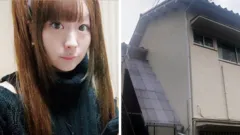
One resident in the Setagaya ward of Tokyo, a young entertainer known as Ryua, utilizes this discount to live in a fashionable district. Having moved into an apartment where a man had committed suicide, she pays 45,000 yen ($285) per month for a 25-square-meter bedsit. Without the stigmatisation, the standard rent for such a space would be approximately 62,000 yen, representing a discount of nearly 30%.
In rural areas, the savings can be even more dramatic. In Kagoshima, located in southwestern Japan, a 79-year-old American resident, Diane Tincher, purchased a large three-bedroom house for 20 million yen. Similar properties in that location typically sell for up to 45 million yen. This significant reduction was due to the fact that an elderly woman had died alone in the home, a circumstance that stigmatises the property in the eyes of the local population.
How does Oshimaland facilitate the search for these homes?
Oshimaland is a specialized platform that serves as a central hub for identifying jiko bukken across Japan. Launched in 2005 to cover the Tokyo metropolitan area, the website expanded its reach to the rest of the country and eventually into international markets in 2011. The platform operates on a crowdsourced model, meaning that information regarding specific incidents and the history of various homes is contributed by members of the public.
The website provides detailed accounts of the events that occurred at specific addresses, allowing bargain hunters to vet the 'type' of haunting or incident they might be facing. While such properties were historically viewed as undesirable options, the platform has become an essential tool for a growing demographic of pragmatic buyers and renters.
The evolution of the jiko bukken market
The market for stigmatised properties is undergoing a shift driven by economic necessity. Teru Oshima, the founder of Oshimaland, has observed that while these homes were once considered unattractive, the changing economic landscape is altering consumer behavior. As property prices and the general cost of living have risen, the perceived risk of a 'ghost' is being weighed against the tangible benefit of affordability.
Is the perception of haunted homes changing in Japan?
Economic pressures are gradually eroding the absolute taboo surrounding jiko bukken. A survey conducted in 2025 indicated a significant shift in public sentiment: more than half of the Japanese population would now consider renting a stigmatised property if the price was sufficiently low. This suggests that for a large portion of the population, financial stability is beginning to take precedence over traditional superstitions.
Despite the economic incentives, the cultural respect for the deceased remains a core part of the experience for those who do move in. Some residents, like Ryua, do not view the presence of a spirit as a negative, but rather as a matter of coexistence. She expresses a view that because ghosts were once living human beings, they deserve respect rather than fear. This pragmatic approach to the paranormal allows residents to enjoy the benefits of a bargain while maintaining a sense of cultural decorum.
Frequently asked questions
What is the difference between a regular house and a jiko bukken?
A regular house is a standard dwelling with no recorded history of significant tragedy. A jiko bukken is a property that has been officially categorised as stigmatised due to a death involving suicide, murder, or a lonely death where the body was not immediately found.
How much can you save by renting a stigmatised property?
Renters can often secure significant discounts, sometimes approaching 30% of the market rate. For example, in Tokyo, a property that would normally rent for 62,000 yen might be available for 45,000 yen if it is classified as a jiko bukken.
Is it legal for Japanese agents to hide a death in a property?
No, it is not legal under current guidelines. Since 2021, Japanese estate agents are required to disclose deaths involving suicide, murder, or fire, as well as deaths where the body was not discovered for an extended period.
How long must a property's history be disclosed in Japan?
The disclosure requirements differ by transaction type. For rental properties, the history of the incident must be disclosed for a period of three years. For properties being offered for sale, the information must be revealed indefinitely.
What is Oshimaland?
Oshimaland is a crowdsourced website that lists jiko bukken across Japan and internationally. It provides details on the specific incidents that occurred at various properties, helping consumers find discounted homes that have been stigmatised by past events.
Key takeaways
- jiko bukken are Japanese properties stigmatised by tragic deaths, offering significant discounts.
- Renters can save nearly 30% on monthly costs in urban areas like Tokyo.
- Buyers in rural areas may find homes at roughly half the standard market price.
- Japanese law requires mandatory disclosure of certain deaths for rentals (3 years) and sales (indefinitely).
- Economic shifts are leading over 50% of Japanese people to consider renting stigmatised homes.
Conclusion
The phenomenon of jiko bukken highlights a unique intersection of deep-seated cultural superstition and modern economic reality in Japan. While the concept of yuurei continues to influence the real estate market, the rising cost of living is driving a pragmatic shift in consumer behavior. As more individuals prioritize affordability, the stigma associated with tragic deaths is being balanced against the significant financial advantages of these properties. Whether through specialized platforms like Oshimaland or government-mandated disclosures, the market for stigmatised homes remains a vital, albeit unconventional, segment of the Japanese housing landscape.