Who was Ranji Smile and how did he arrive in America?
Ranji Smile was a highly theatrical chef whose true origins remain a mystery, though he arrived in New York in the summer of 1899 after sailing from London. While his real name is unknown, historians suggest 'Ranji' may have been a reference to the British-Indian cricket star KS Ranjitsinhji, and 'Smile' might be an anglicization of the name Ismail. Upon entering the United States via Ellis Island, he adopted the more egalitarian American name 'Joe' to better suit his new environment.
Before his arrival in the US, Smile had already established himself in the elite culinary circles of London, serving as a curry cook at prestigious institutions such as the Savoy and the Cecil hotels. His move to New York was facilitated by Louis Sherry, the owner of the famed Sherry's Restaurant on Fifth Avenue, who recognized Smile's unique skills and invited him to bring his expertise to the American market.
How did Smile influence the New York culinary scene?
Smile's presence at Sherry's Restaurant helped introduce exotic flavors to a Manhattanite palate that had previously lacked significant exposure to Indian spices. During the Gilded Age, Sherry's was a premier dining destination, rivaling Delmonico's and catering to the city's wealthiest families, including the Astors. Smile thrived in this high-society atmosphere by turning cooking into a dramatic performance.
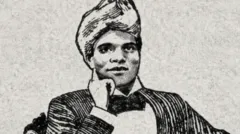
Dressed in a blue silk turban and a satin coat, Smile would perform a formal salaam before serving his guests. He introduced novel dishes that captured the public's imagination, such as 'Lettuce Ceylon' and preparations of Bombay duck—a glutinous lizardfish prized in coastal India. His fame grew so rapidly that newspapers frequently featured him, with some headlines claiming that New York women were captivated by his presence. This celebrity status provided the momentum he needed to launch his own venture.
The spectacle of Gilded Age dining
The era in which Smile operated was defined by extreme opulence and theatricality. At Sherry's, dining was often an immersive experience; for instance, patrons were known to ride horses into the ballroom to eat while mounted. Smile's ability to blend culinary skill with showmanship made him a perfect fit for this culture of excess, allowing him to bridge the gap between exoticism and high-society entertainment.
What happened to the Omar Khayyam restaurant?
In late 1901, Smile leveraged financial backing from prominent financier Roland R. Conklin to open Omar Khayyam, a restaurant dedicated exclusively to Indian cuisine. Located at 325 Fifth Avenue, the establishment was situated in a prime real estate district near the original Waldorf-Astoria Hotel. The restaurant was designed to be a sensory experience, featuring Indian draperies, hanging lanterns, and a staff of Indian musicians and waiters wearing voluminous turbans.
Despite the ambitious setup and the prime location, the restaurant's success was short-lived. Within just one year, Omar Khayyam shuttered its doors. Reports from the time, including accounts from the New York Sun, suggested that the American public viewed Indian food as a passing fad and quickly lost interest. This failure marked the beginning of a shift in Smile's career from legitimate chef to a more controversial figure.
Why did Ranji Smile face legal and social controversies?
As his culinary business declined, Smile's penchant for showmanship transitioned into what many perceived as criminal deception. He began claiming to be a prince and the son of the emir of Baluchistan, a title that was entirely fabricated. His attempts to maintain this persona led to significant legal trouble, including allegations of human trafficking.
According to subsequent federal cases, Smile had recruited a retinue of staff in Bombay—including valets, a dancing girl, and elephant drivers—under the guise of being a royal guest at a coronation. He then illegally trafficked these individuals into the United States to work at his restaurant. While Smile managed to evade deportation, many members of his retinue were not as fortunate. His later life was characterized by a series of legal brushes, ranging from refusing to pay restaurant bills to allegations regarding the forcible confinement of one of his staff members.
The decline of a public figure
Smile's later years were spent traveling across the country, performing cooking demonstrations that blended food with further fabrications. In Washington D.C., he would present dishes like a dessert called 'bungalow' while accompanied by jugglers. He frequently changed his backstory, at one point claiming to be the brother of a fictional figure known as the 'great Beglerberg of Baluchistan.' Eventually, the weight of his deceits and legal troubles caused him to retreat from public life. By the 1920s, he had largely abandoned cooking, and by 1937, he had effectively vanished from the historical record following an annulment filing by one of his wives.
How did Indian cuisine eventually take root in America?
While Ranji Smile's individual business failed, he and subsequent immigrants played a crucial role in the long-term popularization of Indian food in the United States. Following Smile's era, other figures began to find more sustainable ways to introduce the cuisine to the American public.
In 1909, Saint Nihal Singh, a journalist from Punjab, used his platform in the Chicago Daily Tribune to share recipes for items like bhajias, puris, and halwa. He was practical about the limitations of the era, advising readers to find Indian ingredients in Chinese grocery stores and even suggesting hamburger meat as a substitute for traditional ingredients in meat pilaf. This helped normalize the use of Indian flavors within the American culinary framework.
Another significant figure was K.Y. Kira, a man from Ceylon who arrived at Ellis Island after Smile's peak. Kira successfully navigated the American landscape by joining circus troupes before opening the Ceylon India Inn in Harlem in 1913. Unlike Smile's venture, Kira's restaurant became a massive success, eventually moving near Times Square and catering to the stars of Broadway and Hollywood. The Ceylon India Inn remained in operation until the late 1980s, serving as a lasting testament to the growing American appetite for Indian culture and cuisine.
Frequently asked questions
Was Ranji Smile the first Indian chef in the US?
While he is credited with opening what was likely the first dedicated Indian restaurant in 1901, he was not the first Indian cook in America. He followed a tradition of Indian culinary presence, such as Sake Dean Mohamed's Hindostanee Coffee House, which had existed in London and influenced early American perceptions.
What was the Omar Khayyam restaurant?
Omar Khayyam was the first Indian-themed restaurant in the United States, opened by Ranji Smile in late 1901 at 325 Fifth Avenue in New York. It featured authentic Indian decor, musicians, and waiters, but it closed within a year due to lack of sustained public interest.
Did Ranji Smile actually have royal connections?
No, his claims of being a prince or the son of the emir of Baluchistan were fabrications. These claims were part of a larger pattern of deceptive behavior that eventually led to federal investigations and legal challenges regarding his identity and the recruitment of his staff.
How did Indian food become popular in America?
Indian food gained traction through the efforts of various immigrants like Saint Nihal Singh, who shared recipes in newspapers, and K.Y. Kira, whose Ceylon India Inn became a staple of the New York dining scene. Their work helped transition Indian food from a novelty to a mainstream culinary interest.
What happened to Ranji Smile at the end of his life?
Ranji Smile disappeared from the public eye following numerous legal troubles and failed personas. The last recorded evidence of his life is a 1937 court filing for an annulment by one of his wives, after which he seemingly vanished entirely.
Key takeaways
- Ranji Smile opened Omar Khayyam in 1901, likely the first Indian restaurant in the US.
- Smile used theatricality and high-society connections at Sherry's Restaurant to build his initial fame.
- His restaurant failed within a year, partly because Indian food was viewed as a passing fad.
- Smile faced legal issues for allegedly trafficking staff under false pretenses of royalty.
- Subsequent chefs like K.Y. Kira achieved long-term success in establishing Indian cuisine in America.
Conclusion
The legacy of Ranji Smile is a complex blend of culinary pioneering and elaborate deception. While his restaurant, Omar Khayyam, was a commercial failure that lasted only a year, his presence in the Gilded Age New York dining scene helped plant the seeds of Indian gastronomy in American soil. He paved the way for future immigrants who would eventually turn Indian cuisine into a beloved staple of the American diet. Though his personal story ended in controversy and disappearance, the cultural impact of the flavors he introduced remains a permanent part of the American culinary landscape.